Werner-Boyce Salt Springs

March 2024

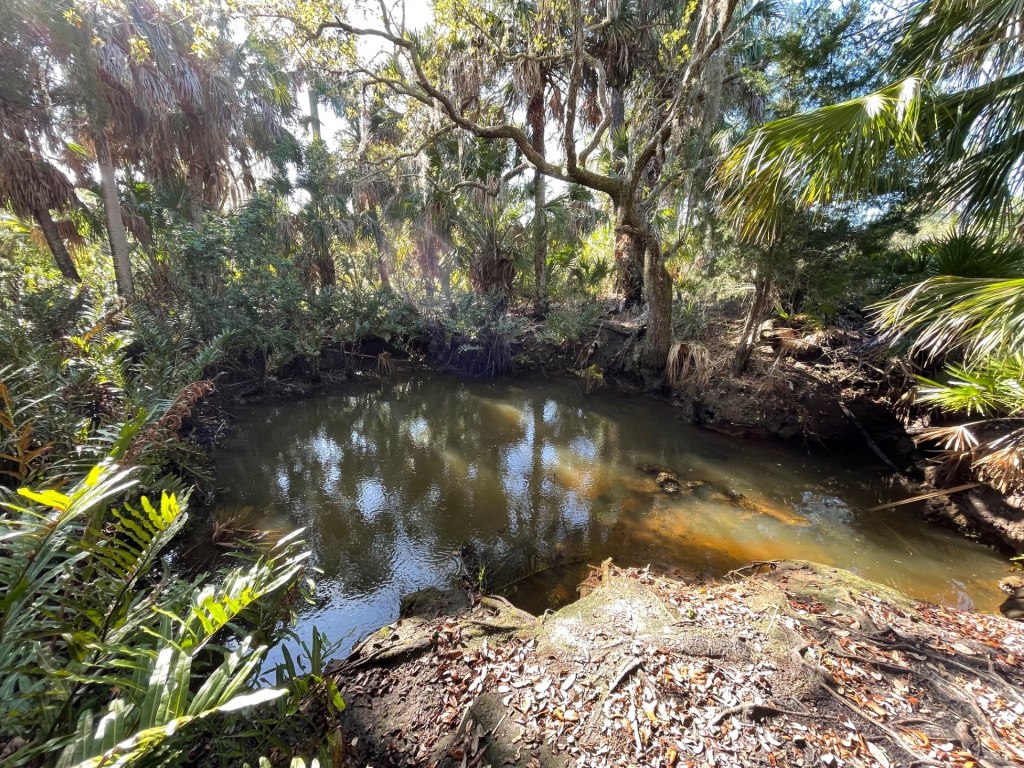
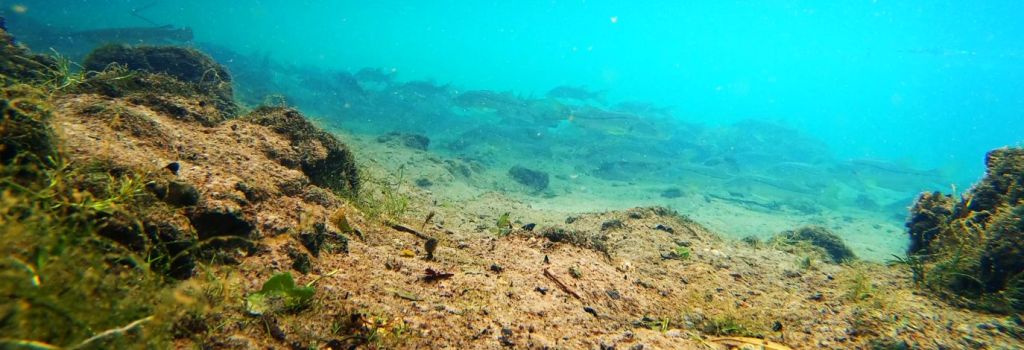
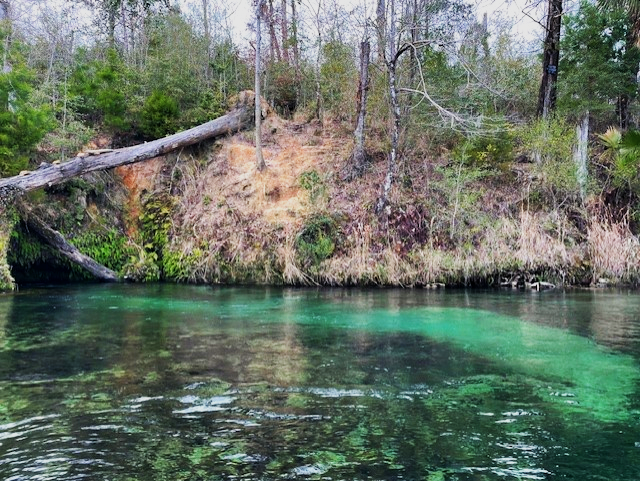
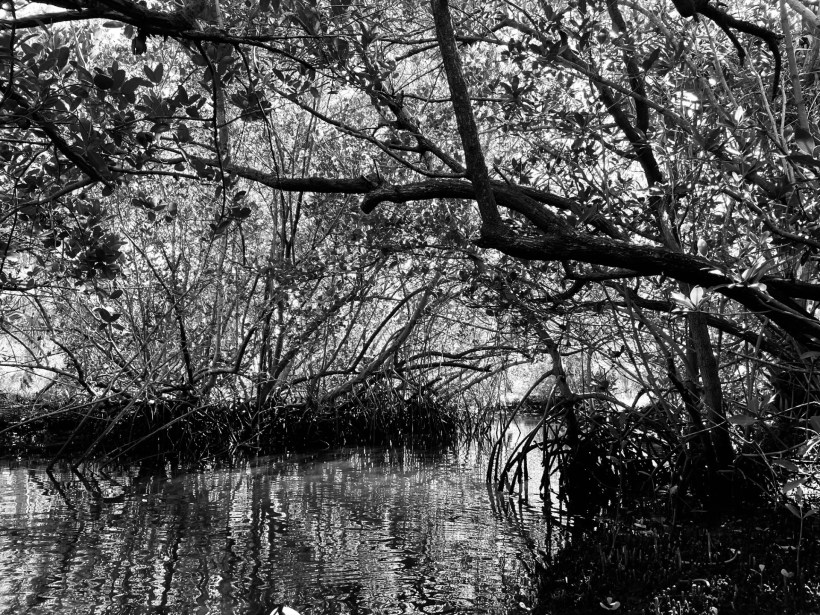
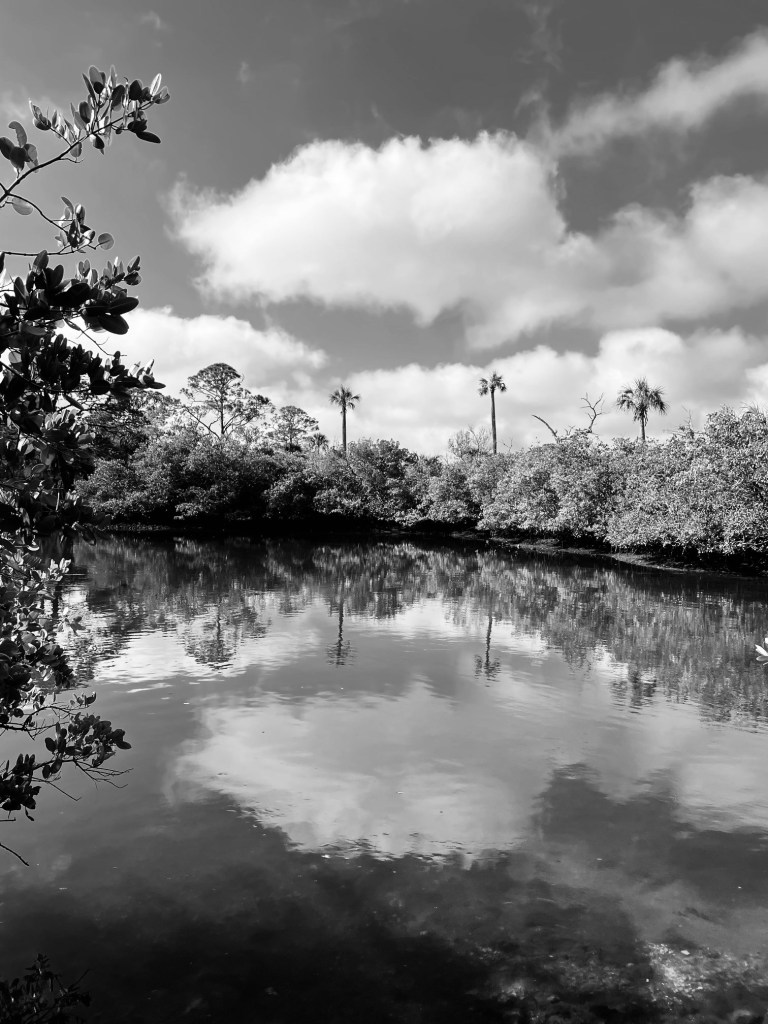
Werner-Boyce Salt Spring is a deep hole out in the matrix of mangrove wetlands, channels, and pools (shown above) of the Nature Coast, about halfway between Homosassa and Clearwater. When in the park, the land seems remote and untouched, but development is not even on the other side of the highway.
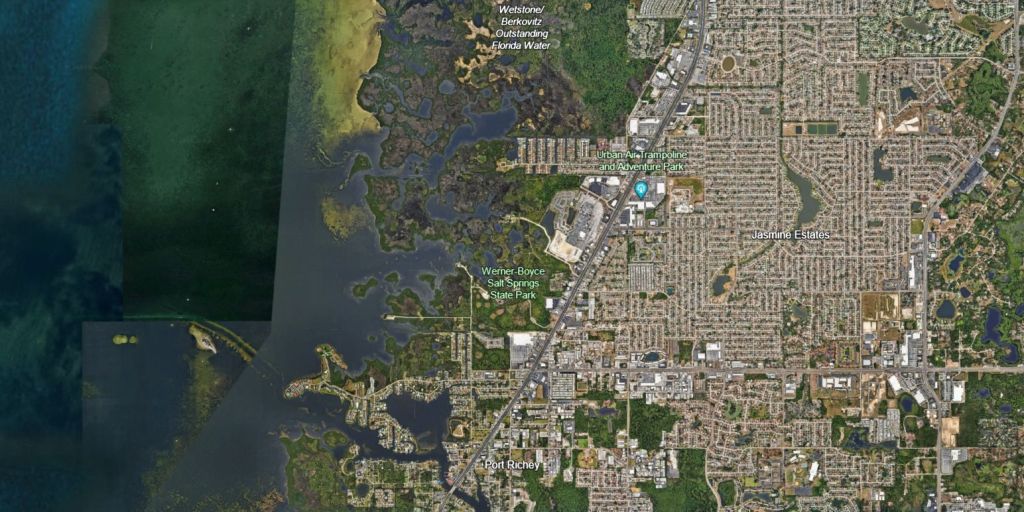
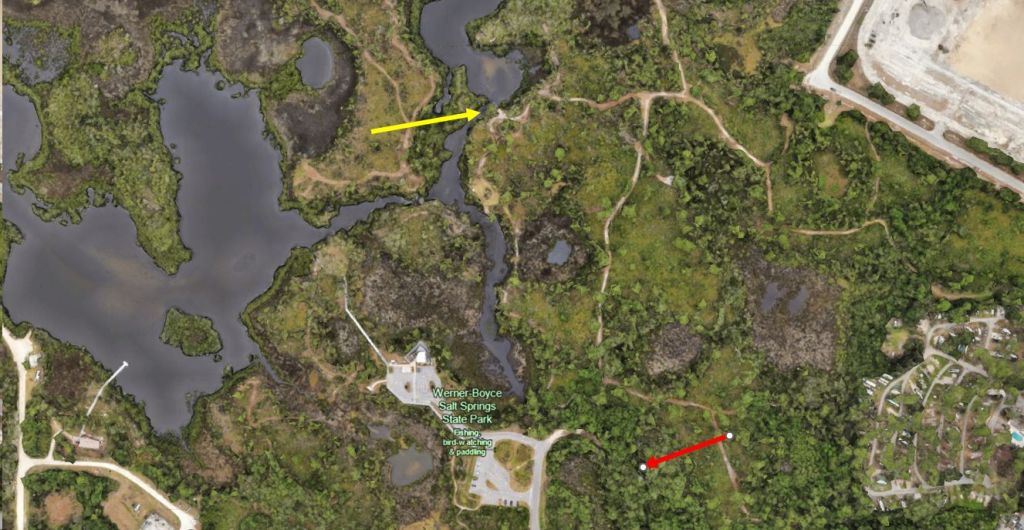
Google Earth images showing the thick development east of Werner-Boyce State Park (top) and a lower altitude view showing Salt Spring (yellow arrow) and Culvert Spring (red arrow).

The spring can be reached on foot by a short walk on a trail from the parking lot, but it is only reachable by boat from the kayak launch at high tide. At low tide, a limestone bridge obstructs passage and creates a “tidal waterfall” and spring water flows over and under this bridge. However, the spring also is open to a large pool on the opposite side. According to the park’s unit management plan (https://floridadep.gov/sites/default/files/02.15.2013_WBSSSP_AP.pdf), the vent is in the side of a rock wall in a wide spot of the tidal creek.
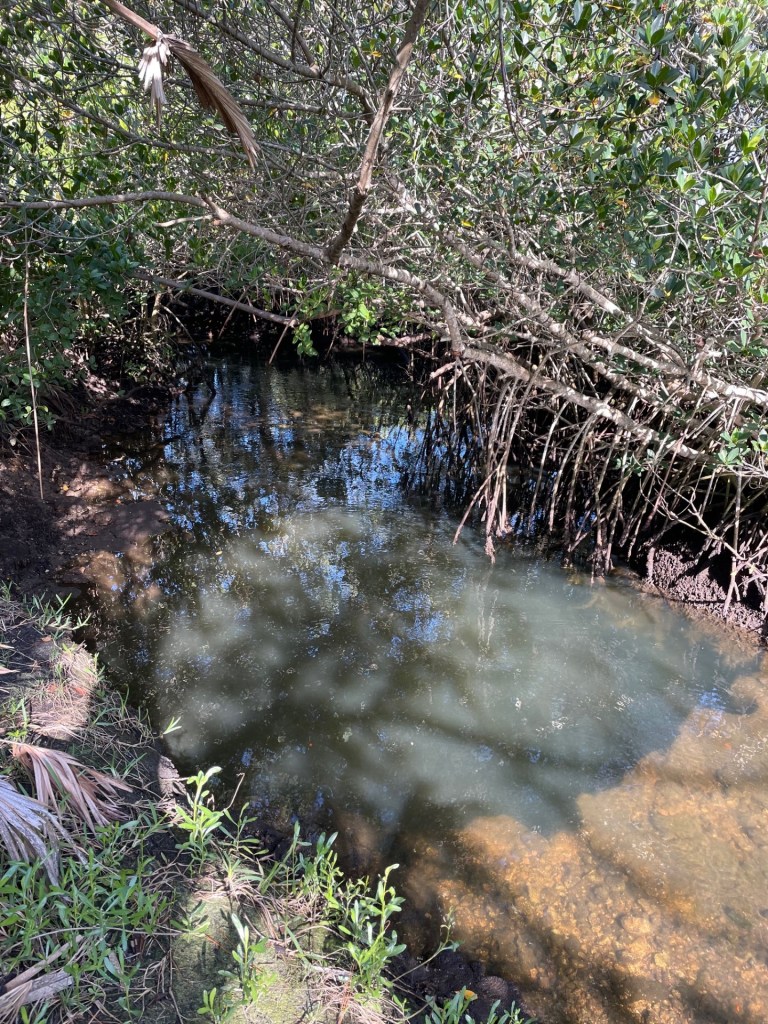
The limestone bridge that makes the “tidal waterfall” at low tide.

The spring is very deep, with a “200-foot deep solution tube” at its entrance and caverns beyond the tube (https://floridadep.gov/sites/default/files/02.15.2013_WBSSSP_AP.pdf). When I visited, visibility was on the order of centimeters.
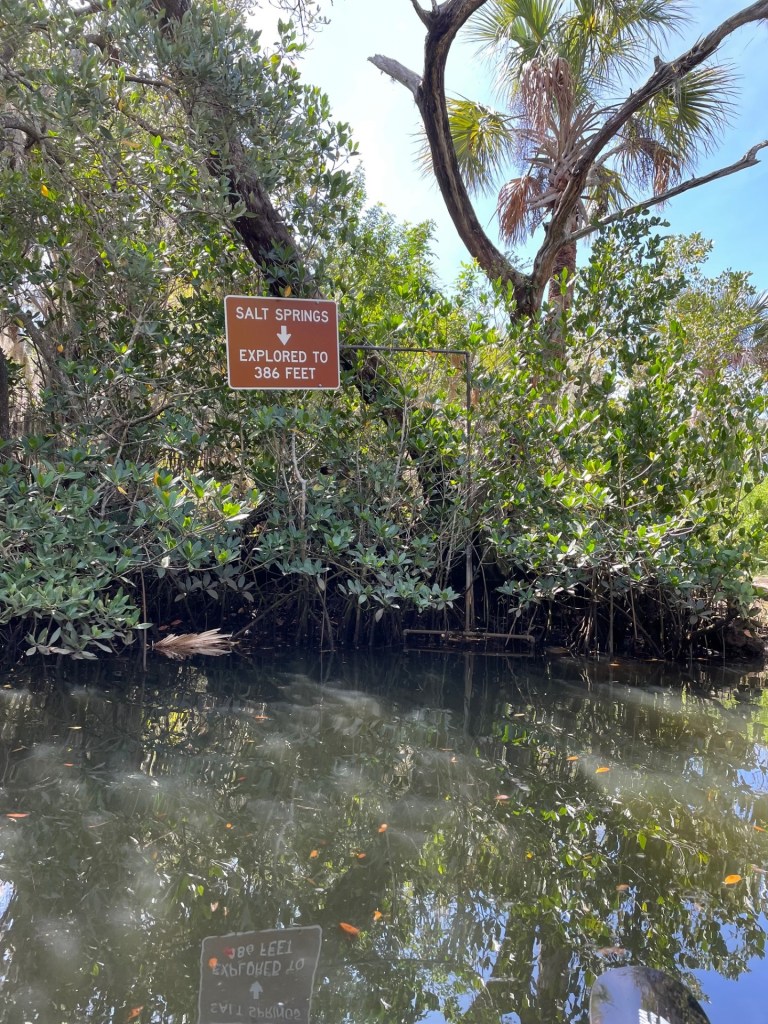
The sign announcing to visitors that they have found the spring. Without the sign, the spring would be difficult to find.

At low tide, an alligator watched over the spring, but it was gone by the time that I came back at high tide.
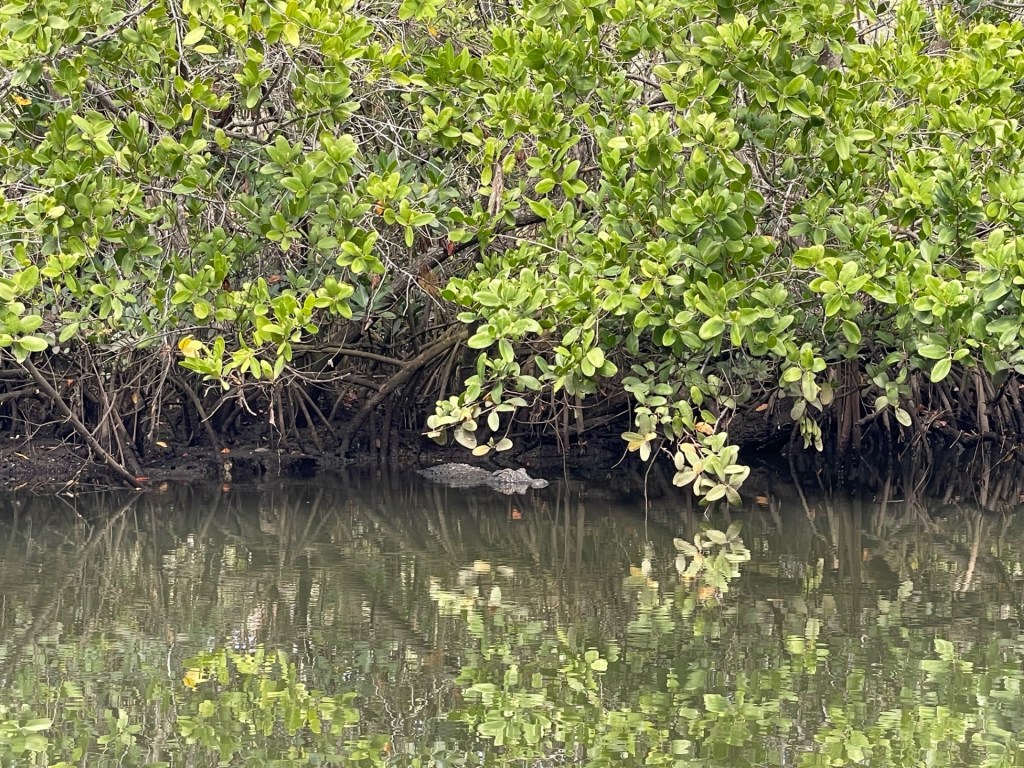
American alligator watching over Salt Spring.

I tried to film at high tide because I could get my boat to the spring with the higher water level, but the water clarity was low and I only recorded a couple of tidewater mojarra (Eucinostomus harengulus).
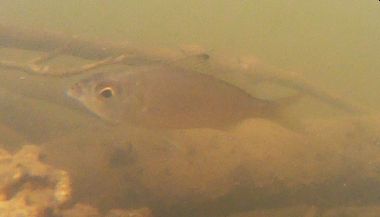
Tidewater mojarra at high tide in the Salt Spring “run”.

I tried again on foot at low(ish) tide, but alas, the water clarity was still low, as was the fish density. I only was able to see a marsh killifish (Fundulus confluentus) and a couple of sailfin mollies (Poecilia latipinna)
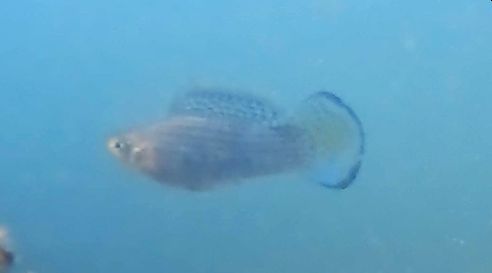
Large, breeding sailfin molly.

There are several other springs in the park, including Cauldron Spring, which walkers cross on the hiking trail to Salt Spring from the parking lot. I apparently missed the origin of Cauldron Spring as it wound back into the salt marsh. From its headspring in a pool (https://floridadep.gov/sites/default/files/02.15.2013_WBSSSP_AP.pdf), it travels north through the culvert under the walking path bridge until it merges with the flow from Salt Spring. I startled a young alligator in this spring and saw a snook (Centropomus unidecimalis) in the run below the culvert late in the day.
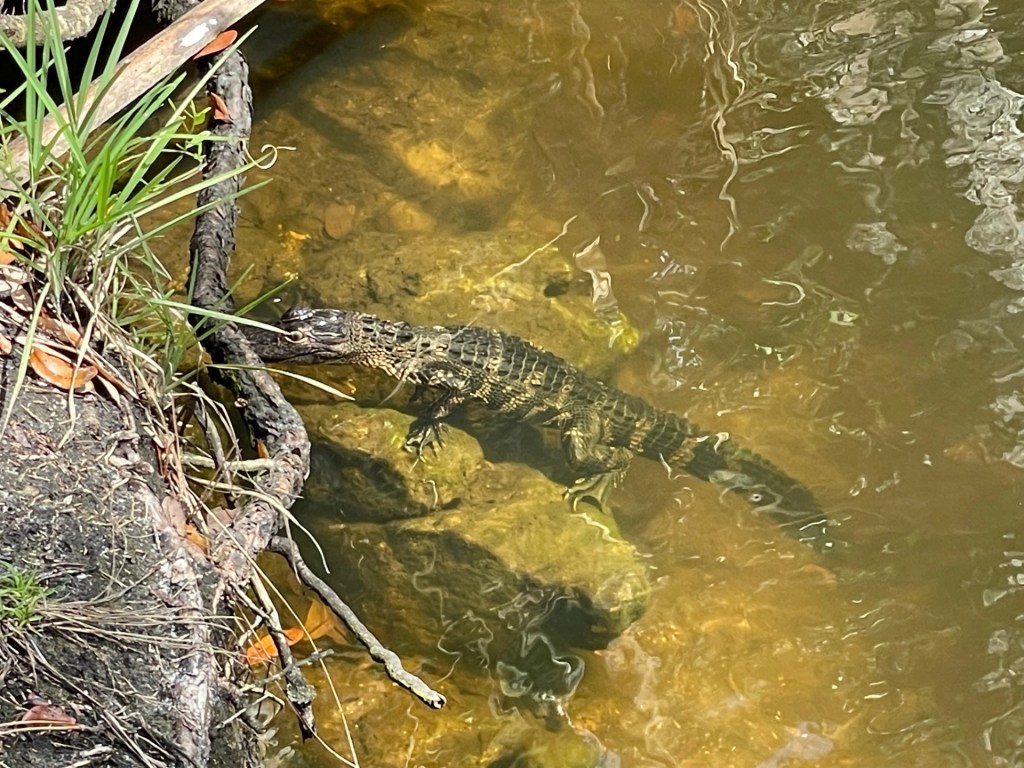
Juvenile American alligator in Cauldron Spring below the culvert.

Above the culvert, I recorded more fish in this spring than anywhere else that day, mostly the highly tolerant mosquitofish (Gambusia holbrooki) and sailfin mollies (Poecilia latipinna), but also a marsh killifish and a couple of spotted sunfish (Lepomis punctatus). However, the water clarity was dreadful everywhere, probably due to natural suspended solids in these salt marsh/mangrove systems.

Marsh killifish in Cauldron Spring above the culvert. Despite the poor water clarity, the fish is identifiable by its stripes and black spot on the rear of its dorsal fin.

The other springs that I saw along the walking path were quite small, including “Reflection Spring” and “Red Spring”. I did not sample these springs.
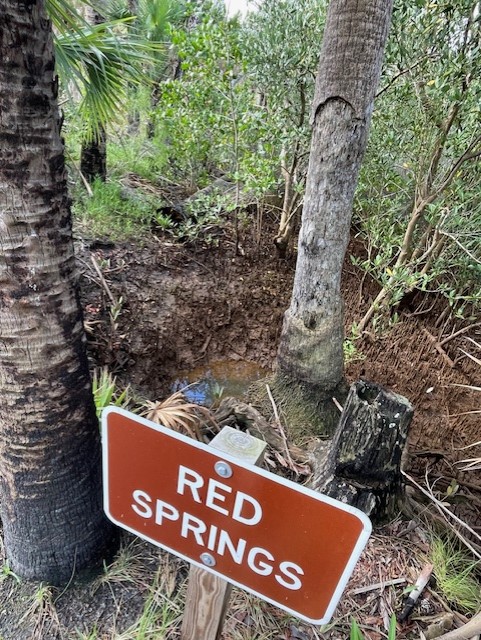
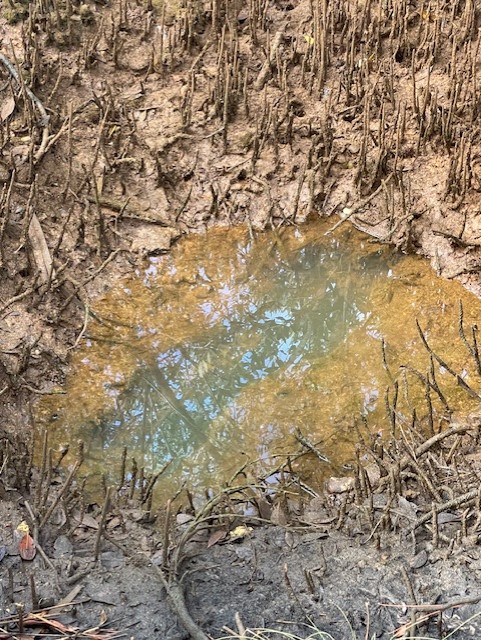
Red Spring.
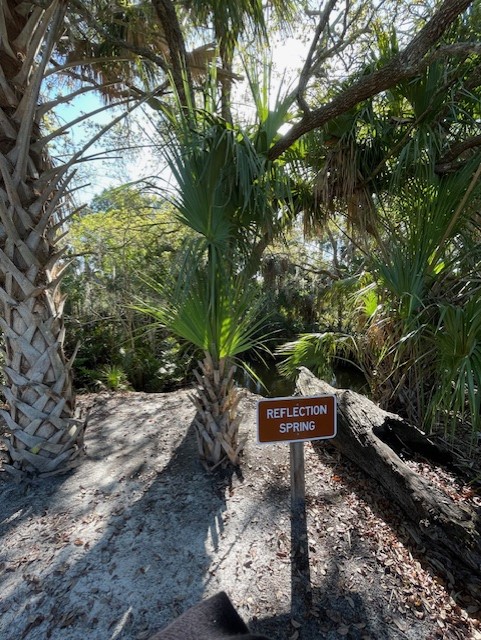
Reflection Spring.

I found almost no data on groundwater flow or water quality for these springs. The park’s unit management plan reported that the flow was 9-10 cfs, as measured three times in the 1960-1970s (I also found a measurement of 8.36 cfs from 1997 on the USGS NWIS website). The report also mentioned that the hydrology of the area was modified by mosquito ditches and by storm water drainage from the town of Port Ritchey just to the south, which occurred both through drainage canals and through sheet flow. Some storm water control pond construction and dredging for residential and commercial areas also has occurred on the lands abutting the park. Although the unit management plan alluded to water quality data, I only found data related to salinity, which I found on the USGS NWIS website. The springs in the park are not in “Springs of Florida” USGS publication (https://ufdc.ufl.edu/UF00094032/00001/images).

The data that I collected suggested that the groundwater was a bit warmer than the tidal water (25 vs 23oC). The oxygen concentrations were moderate (~4-6 mg/L) and higher above the culvert in Cauldron Spring (7.2-7.5 mg/L). As might be expected, the conductivity (a measure of the number of ions in freshwater, like the freshwater version of salinity) was high in Salt Spring (21-22 microS/cm). It was approximately two orders of magnitude higher than many of the other springs that I have sampled. Interestingly, the conductivity that I measured late in the afternoon in Cauldron Spring was much lower, both below (1.5-1.7 microS/cm) and above (~1.8 microS/cm) the culvert. It would appear that Cauldron Spring is less tidally influenced than Salt Spring, which is connected to the Gulf through channels in the mangroves.
Homosassa Springs

March 2024

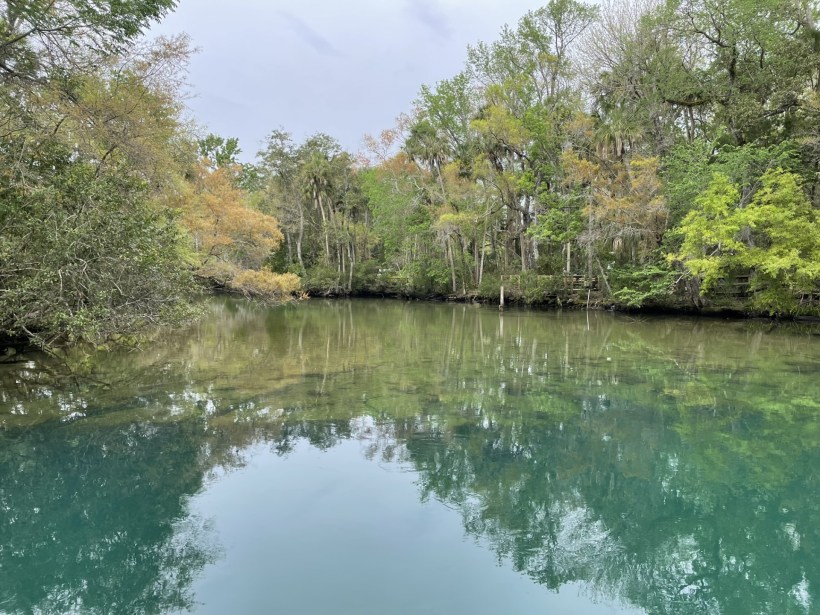
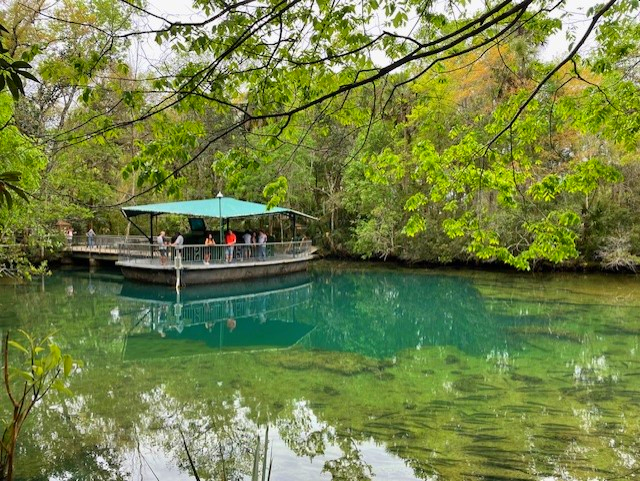
The Homosassa Spring main vent, called “The Fish Bowl”.

Homosassa Springs is like no other: part spring, part rehabilitation facility, part zoo. It sits on the “Nature Coast”, just south of Crystal River and north of its famous cousin, Weeki Wachee State Park. The whole coastline in that region of Florida is fairly undeveloped, but a ridge just to the east of the coastline has experienced rapid development. The land just to the east of that ridge has been in agricultural use for many, many decades.

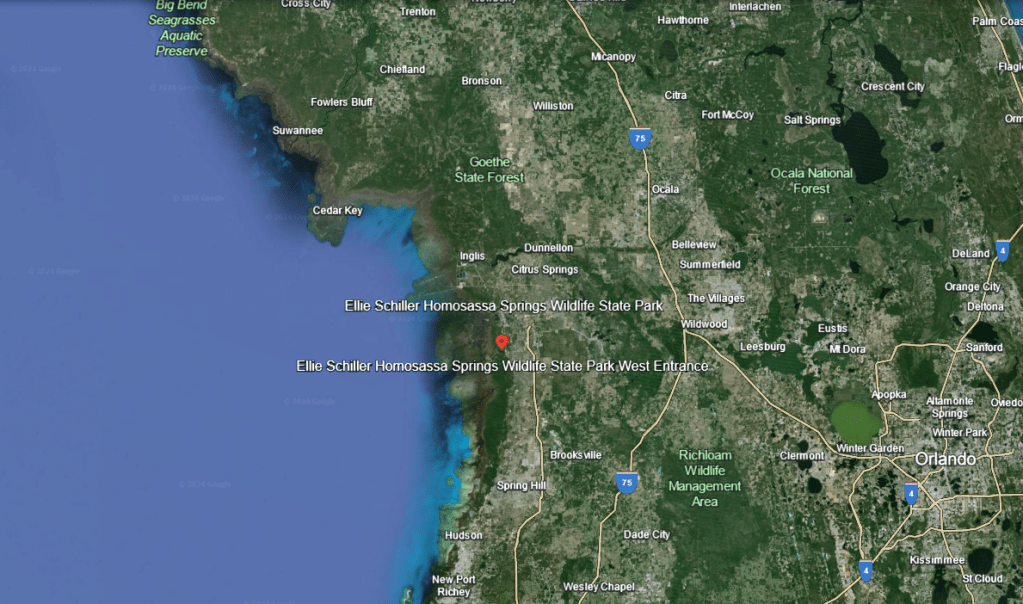
The location of Ellie Schiller Homosassa Springs Wildlife State Park in the Nature Coast.

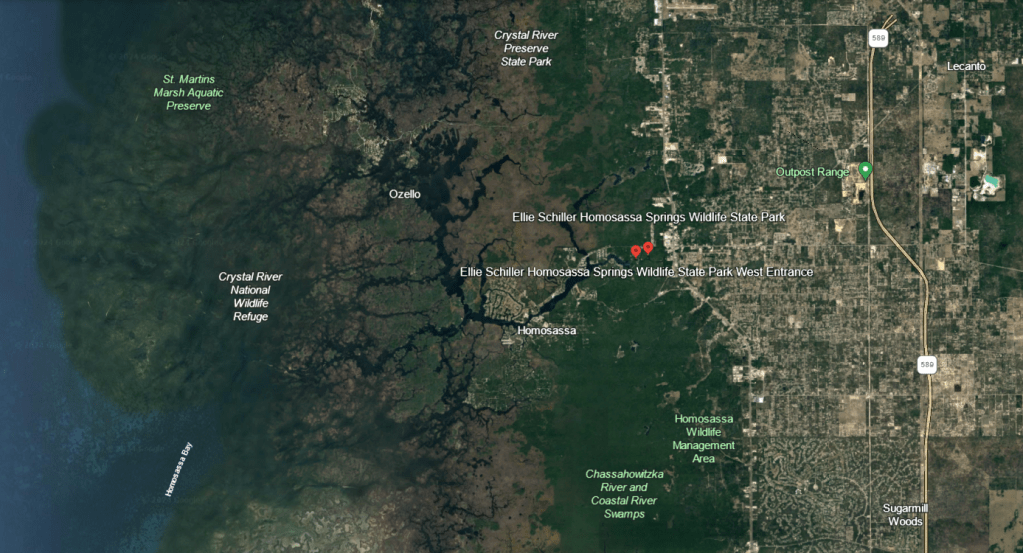
A close-up of the Nature Coast showing Homosassa Springs feeding into the matrix of channels along the Nature Coastline.

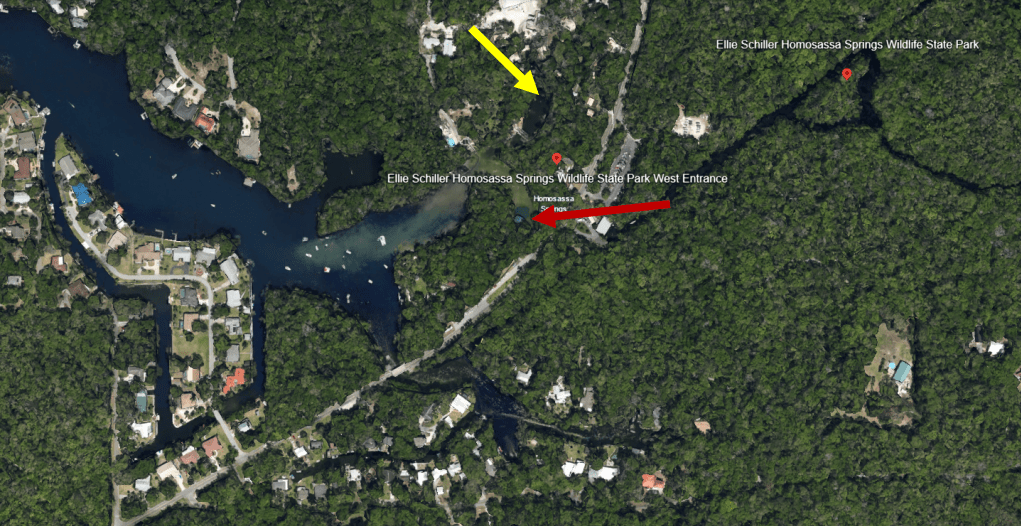
An even closer close-up of the spring showing the clear water flowing into the larger channel of the Homosassa River. The red arrow shows “The Fish bowl” and the yellow arrow shows the wildlife park.

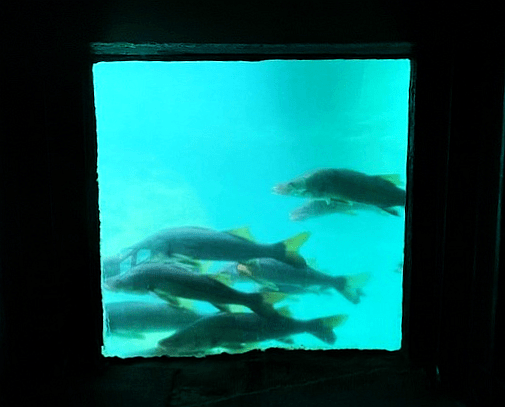
Officially called Ellie Schiller Homosassa Springs Wildlife State Park, the spring has been an attraction since the late 1800s. The park was one of Florida’s earliest attractions; a train bought visitors to the spring from 1893 to 1941. In the 1920s, a bridge built over the 55 ft. main vent, christened “The Fish Bowl”, allowed visitors to see through the clear water to the fish below. In the 1950s, an observation platform and underwater observatory replaced the bridge to give visitors an even more intimate view of the abundant common snook (Centropomis unidecimalis) and grey snapper (Lutjanus griseus) in the headspring. The state bought the property in 1989 and named the park for noted fisheries biologist/environmental advocate/philanthropist Ellie Schiller.

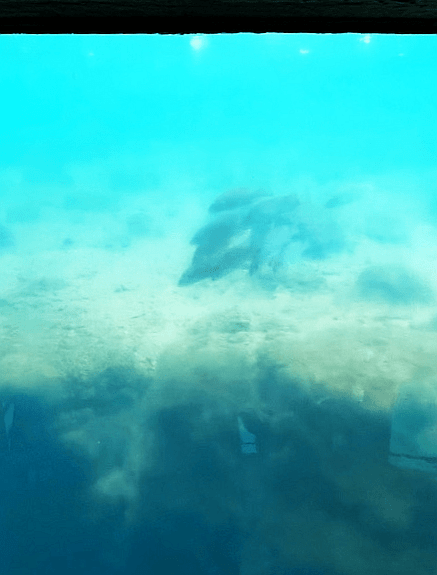
Common snook (top) passing by the window of the underwater observatory and some grey snapper (bottom) contemplating the drop off to the vent at the headspring.

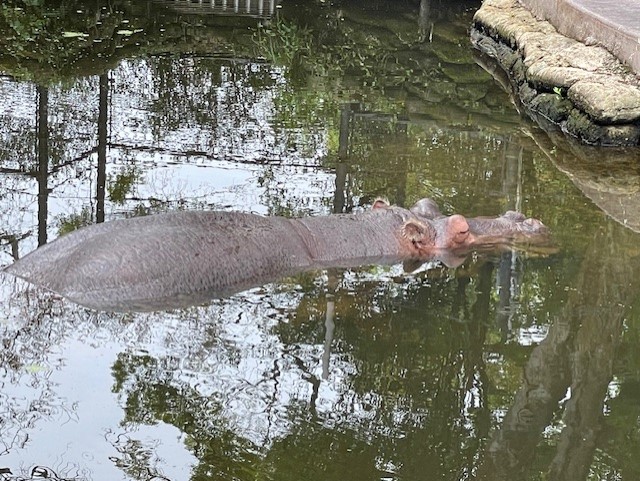
In the 1940s, the wildlife park contained a variety of exotic animals like lions, bears, and monkeys. Now all the animals in the park are native to Florida, with the exception of Lu the hippo.

Lu, the hippo (Hippopotamus amphibius).

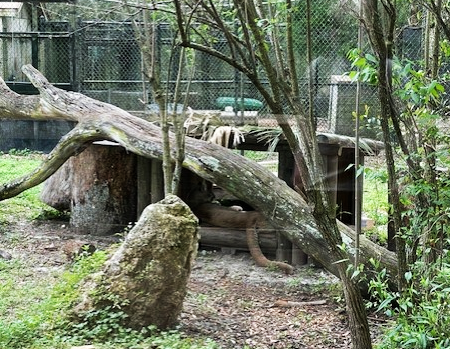
A Florida panther (Puma concolor coryi) resting in its house.

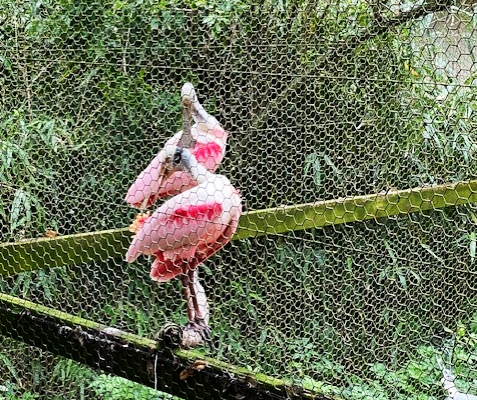
Two roseate spoonbills (Platalea ajaja) preening.

A barred owl (Strix varia) looking decidedly unimpressed.

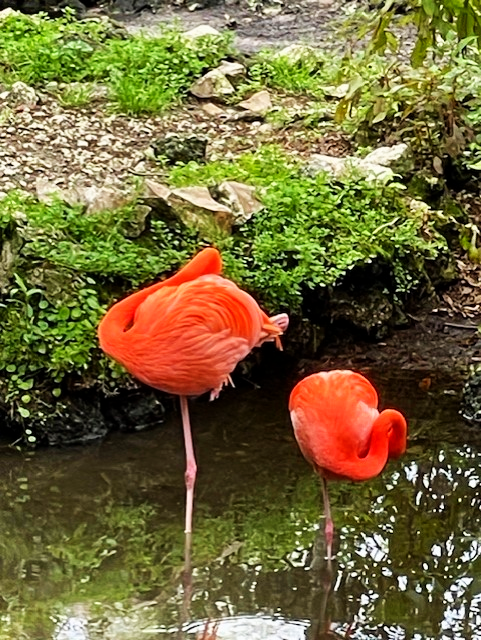
Two flamingos (Phoenicopterus ruber) resting on one leg.

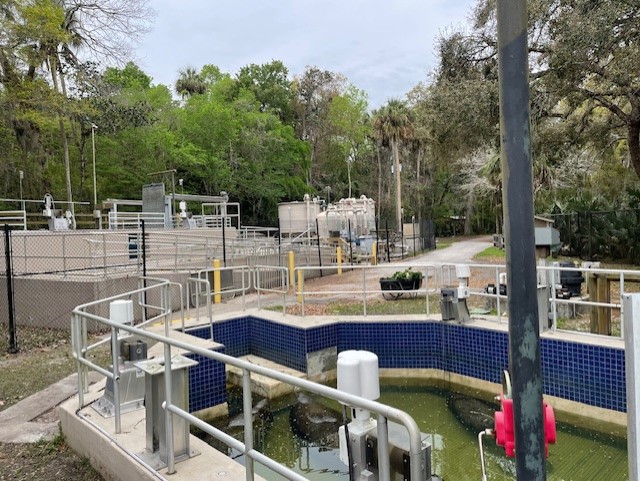
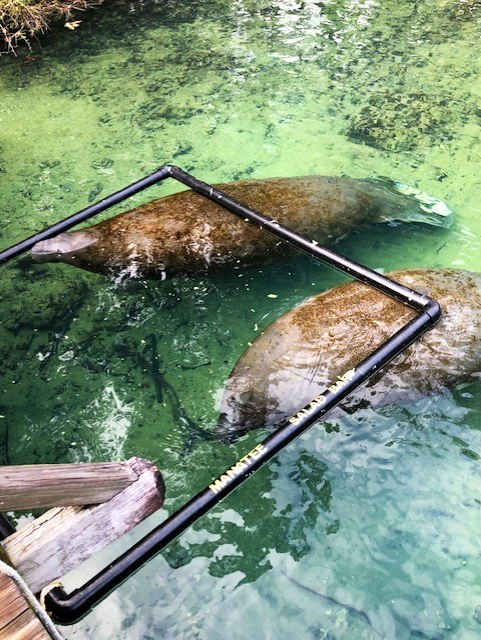
The park also rehabilitates injured manatees and serves as a refuge for uninjured manatees (Trichechus manatus). Manatees that have been hit by boats or stricken by cold stress (one of the most common sources of mortality for manatees after boat strikes) can recouperate in tanks on land. Once healthy enough to leave the tanks, they may be released into a large pen in the spring itself.

Manatees in the rehabilitation tanks (top) and in the natural pen being fed supplemental food (bottom).

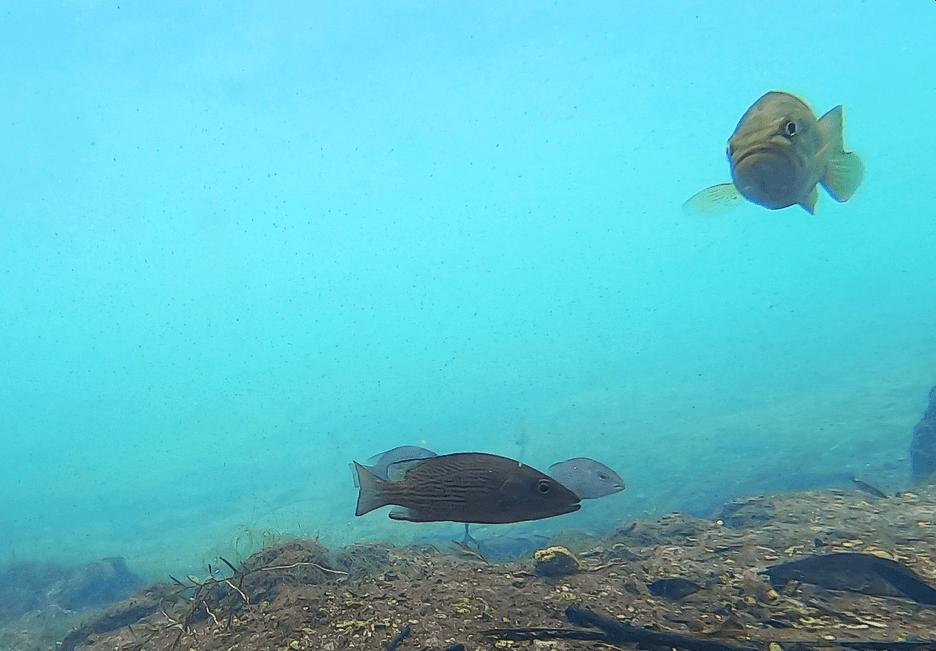
Unfortunately, my access to the water was somewhat limited, given the many uses and high public presence at this spring. The vast majority of the fish that I observed were in one of three salt-tolerant species: common snook, grey snapper, or sheepshead (Archosargus probatocephalus). I also observed a couple of Atlantic needlefish (Strongylura marina). Among the freshwater species, I recorded largemouth bass (Micropterus salmoides), spotted sunfish (Lepomis punctatus), and mosquitofish (Gambusia holbrooki).

Common snook in The Fishbowl.

Three grey snapper and a largemouth bass near the bridge on the run that leads into the wildlife sanctuary.

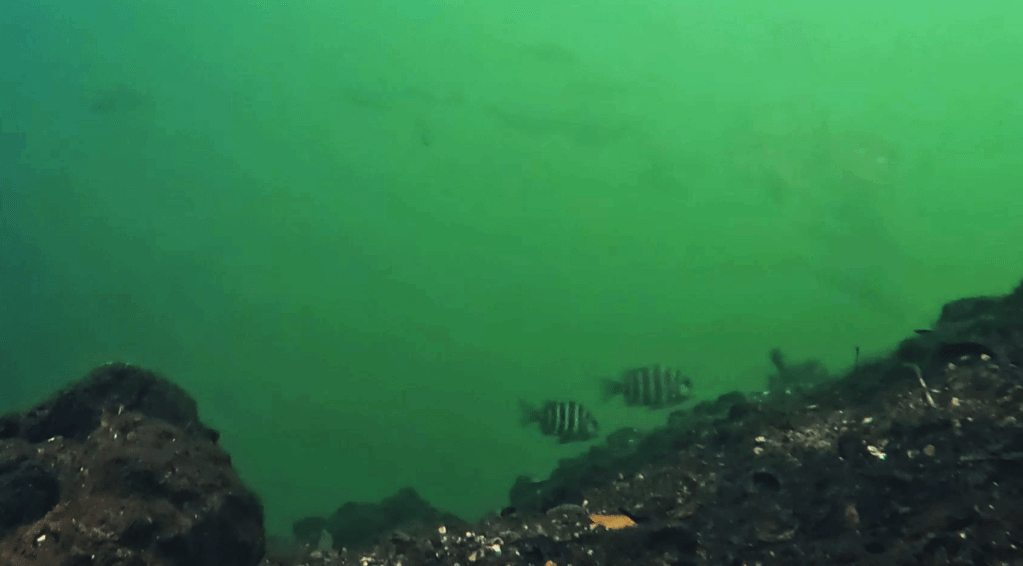
Two sheepshead in the Homosassa Springs’ Blue Spring.

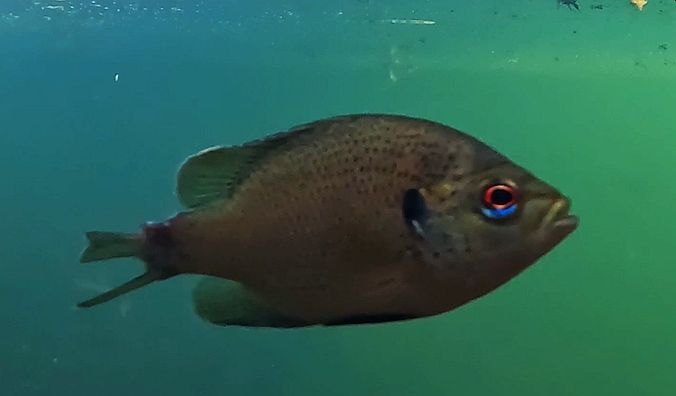
Two spotted sunfish near the bridge on the run that leads into the wildlife sanctuary.

Homosassa Spring a first magnitude spring, with discharge ranging from 30 to over 100 cfs. The temperature (~23.5oC) and dissolved oxygen (2.3-4.7 mg/L) measurements that I collected were in line with the data collected by the Southwest Florida Water Management District and the USGS and are reasonably typical for Florida springs. As might be expected from the large number of salt-tolerant fish, Homosassa Springs is one of the higher conductivity (sort of the freshwater version of salinity) springs in Florida. A Southwest Florida Water Management District website reports that the spring receives flow from three vents, each differing in salinity, although there are more small springs in the springshed (https://www.swfwmd.state.fl.us/projects/springs/homosassa). The conductivity that I measured was more than an order of magnitude higher (3100 to 5000 microS/cm) than the conductivity at most of the other springs that I visited (in the 100-300 microS/cm range). The high conductivity, the large number of predators, and my limited ability to sample likely account for the low number of freshwater fish that I observed.

This spotted sunfish was chewed by something…

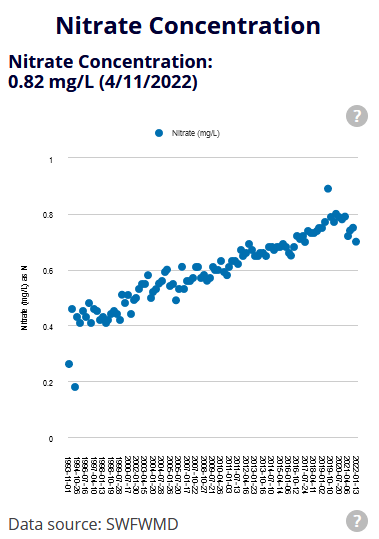
Unfortunately, Homosassa Springs is one of the Florida springs that has experienced dramatic and linear increases in nitrate loading, perhaps due to a combination of agricultural and residential land use. The Basin Management Action Plan (BMAP) produced for Homosassa Springs by the FL Department of Environmental Protection in 2018 cites farm fertilizer as the largest source of load (24%) followed by urban turfgrass (19%), septic systems (15%), and sports turfgrass (12%). Livestock waste also has contributed substantial nutrients to the springshed (11%). A variety of projects have been planned, including fertilizer application reductions, education programs, and transitioning homes from septic to sewer. Interestingly, the numbers appear to have dropped off in the last couple of years.

Econfina Creek: Gainer and Bluff Springs

February, 2024

Like the Choctawatchee River, Econfina Creek is a hotspot for springs in the panhandle. Many of those springs, alas, are on private land, but fortunately, there are some springs accessible from public land.

The SR 20 canoe launch. I travel light.

Econfina Creek flows into Deerpoint Lake just north of Panama City. Although the area to the west looks a little like agricultural land, it is actually part of the Econfina Creek Water Management Area. It felt much more natural on the ground than it appears in the Google Earth image. It was a lovely drive over.

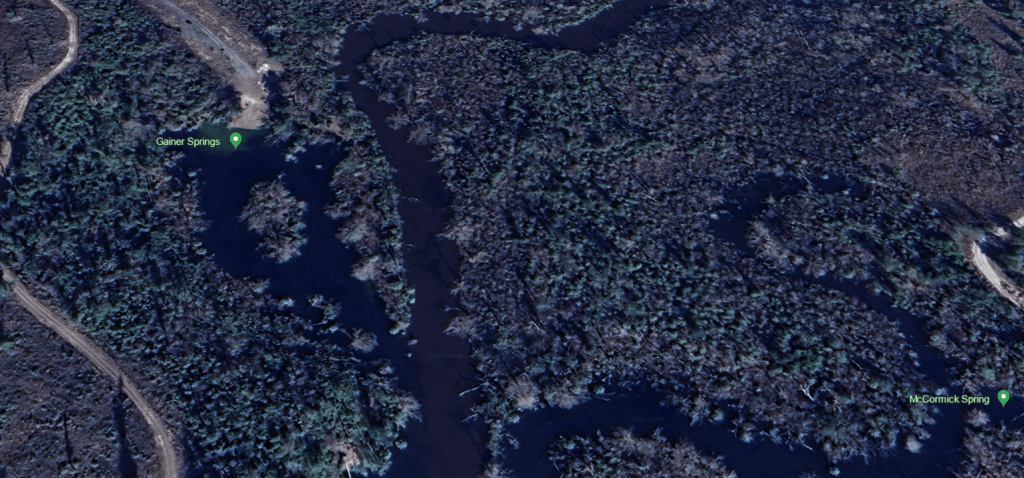
A few of the many springs on Econfina Creek.

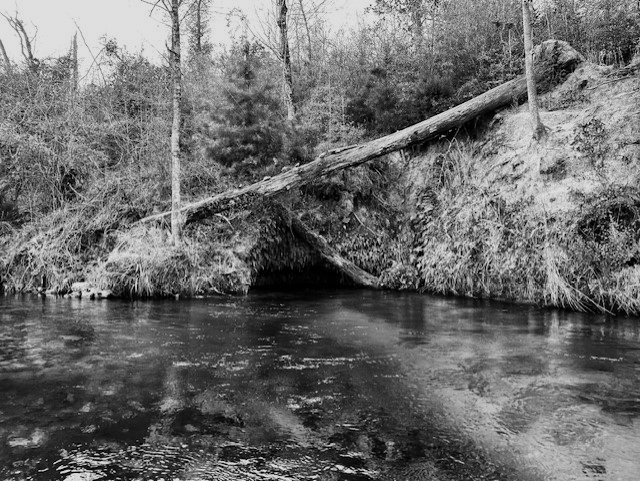
During the planning stages of this project, I was told that the area was completely transformed by the loss of large riparian trees during Hurricane Idalia. Some large trees made through the storm, but clearly the area had been ravaged.

A Google Earth image from 40 m with some downed trees still visible (top), a photo from the river showing trees stripped of most or all of their branches (middle), and some trees that made it through the storm (bottom).

The creek was flowing very brown, turbid, and fast, so I flew down to the springs. Once there, though, the spring water was clear. Despite being the southernmost of the springs that I visited that day, I found Gainer #2 first. Gainer #2 Spring comes from a small cave in the pitted limestone wall along the edge of the river. The pressure from the spring water shot me backwards as I tried to photograph it.

The limestone banks of the river, just upstream of Gainer #2 Spring.

Gainer #2 Spring cave.

Not surprisingly, given the water flow, there were few fish to film. Next to the strong flow out of the cave, there was a little backwater area with a few shiners, but not much else. Fish aren’t stupid.

The cave and its outflow area (top) and the outflow area underwater (bottom). The pressure from the strong water flow from Bluff Spring blasted the sand clear of vegetation and detritus.

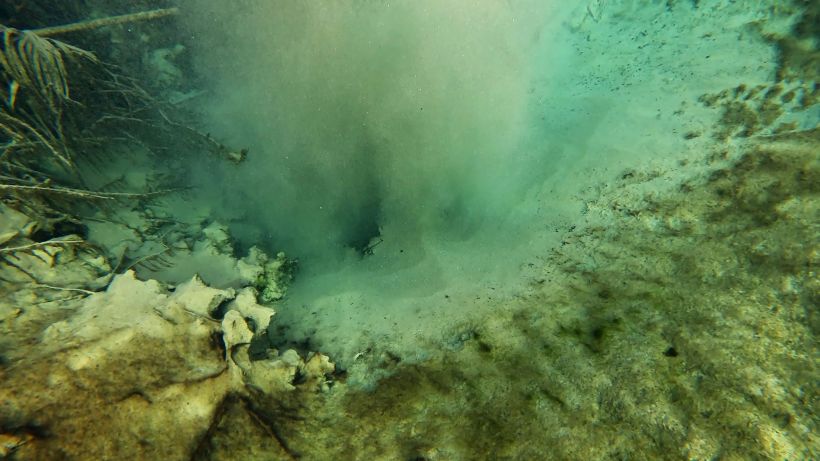
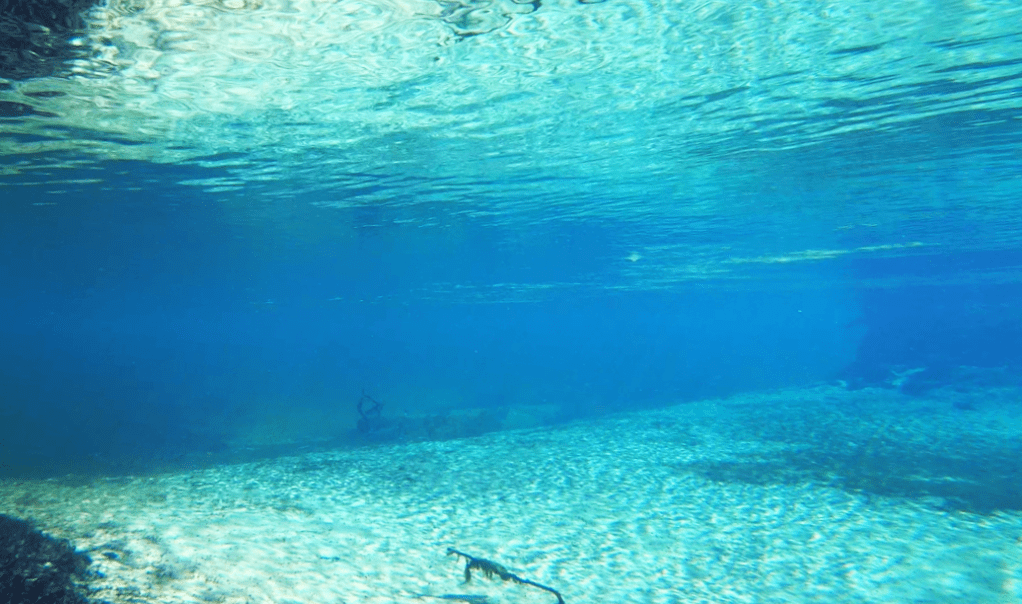
After Gainer #2 Spring, I paddled upstream a hundred meters or so into a little run to reach the Gainer #3 springs. Although the description of this system is Gainer #3, there were actually two springs up this run (and apparently, I missed a third), which formed a large pool with an island in the middle. The spring on the right side of the pool (facing upstream) was a large vent on the bottom and the spring on the left side of the pool came out of a cave in a limestone wall, like a smaller version of Gainer #2. The large vent on the bottom had been the real goal for the day because it is a first magnitude spring, discharging more than 150 cubic feet per second. I missed the spring coming out of the wall on my first visit, but I could not miss the main vent, which was blasting sand out in a plume. It was gorgeous.

Gainer #3 main vent blasting sand.

The caves that represent the other Gainer #3 vents (one on far left, another closer to middle, a third on right).

This system was much bigger than the Gainer #2 system and it supported a lot more fish, including some redear sunfish (Lepomis microlophus). I see this species often at Volusia Blue Spring, but I have recorded them only rarely on this survey of Florida western springs. I also recorded a warmouth sunfish (Lepomis gulosus), which I rarely see and is characterized by its large mouth and iridescent rays radiating back from the mouth on the opercula (gill covers). The bottom of the run was blanketed with a mixture of senescent and live algae, like so many other Florida springs.

Redear sunfish with the Gainer #3 vent in the background.

Bluegill sunfish (Lepomis macrochirus), largemouth bass (Micropterus salmoides), and redear sunfish in the Gainer #3 run.

A slightly banged up warmouth sunfish underneath a bluegill near the cave vents that contribute to the Gainer #3 run.

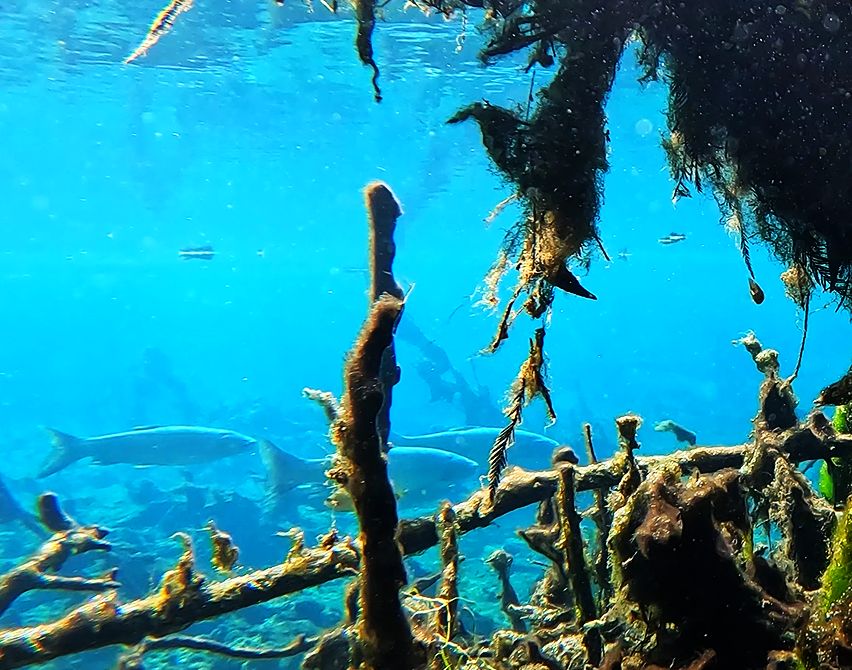
In addition to shiners, sunfish, and bass, I also captured some bluefin killifish (Lucania goodei), Florida gar (Lepisosteus platyrhinchus), spotted sucker (Minytrema melanops), and a few exotic grass carp (Ctenopharyngodon idella). This spring was the only location where I filmed any exotic fish in the panhandle or Big Bend area of Florida.

Florida gar that I scared floating down the run (top) and a spotted sucker (bottom).

Grass carp moving off into the river (bottom).

Racing against the coming end of the day, I also ventured up the Gainer #1 run. This spring run was the longest of the three and much narrower than Gainer #3. However, like the main Gainer #3 vent, it also was shooting out sand, although at a lower volume.

Gainer vent #1C pumping out sand.

The fish that I recorded in Gainer #1C were similar to the two other Gainer springs in the group, although I did not see the grass carp in this shallower spring run. I captured on video mosquitofish, shiners, sunfish, bass, and, in one video, bluefin killifish (Lucania goodei) males showing off their colorful fins in a display of aggression. I also picked up a turtle that passed behind a spotted sunfish (Lepomis punctatus) and a largemouth bass (Micropterus salmoides) in one of the videos taken in the run. The turtle was probably a yellow-bellied slider (Trachemys scripta) according to Terry Farrell, Florida herp expert extraordinaire.

Male bluefin killifish showing aggression.

Spotted sunfish, largemouth bass, and turtle.

Bluff Spring

On my first trip to Econfina Creek, I completely missed Bluff Spring, which was just downstream from Gainer #2. It was substantially smaller than most of the Gainer springs and, although it also had water issuing from small caves, it also had water shooting from underneath a limestone wall. This flow produced a small pool alongside Econfina Creek, which was obvious once I was on top of it by the clear water. All but two of the fish that I recorded here were sunfish; the other two were largemouth bass.

One of the caves releasing spring water (top) and water shooting out from under the limestone wall (bottom).

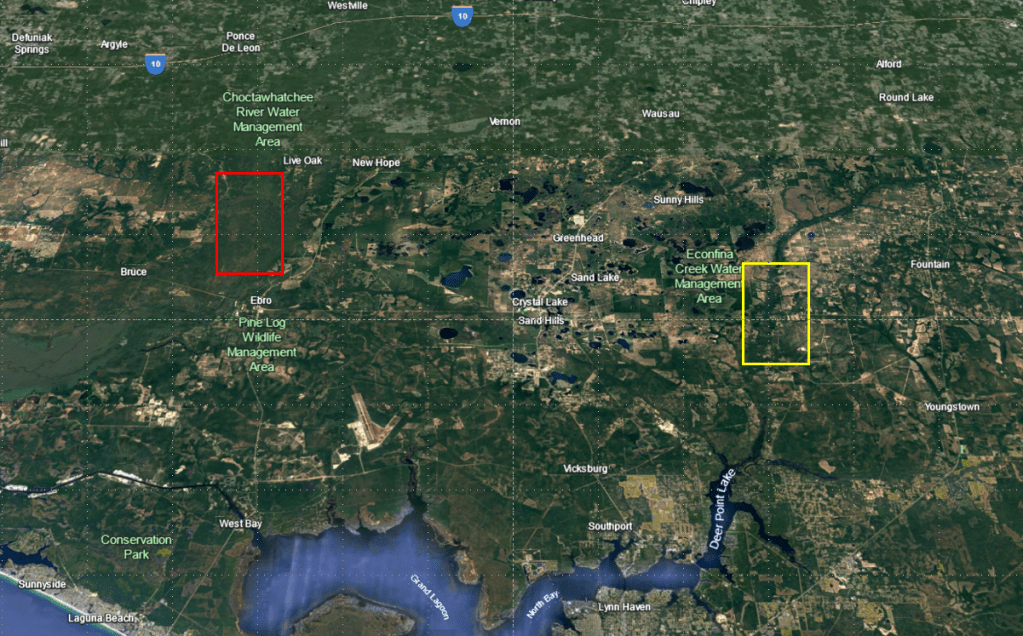
It is interesting that the springs of Econfina Creek were clear when a) the springs of the lower Choctawatchee were not and b) the creek itself felt like it was running fast enough to be flooding. I have a lot to learn about the hydrology of the panhandle.

The clear springs of the Econfina (yellow) as opposed to the brown springs of the lower Choctawatchee (red).

There is a USGS publication that I regularly consult, called the Springs of Florida. It was originally published in the 1977 and it was updated in 2004. Along with lots of useful information about discharge and water quality from the 1960s, 1970s, and early 2000s, there are photos. I do not know when these photos were taken, but in these photos, the substrate of Gainer Springs is bare sand. In my photos and videos, the substrate is covered mostly in senescent and some live algae (the brown is senescent, dying or dead). In fact, in the Gainer vent #3 video, there is a little patch of the senescent algae that goes rolling down into the vent, exposing the sand below, after I apparently disturbed it with my paddle.

Alas, I can find no more current water quality data than what was reported in the Springs of Florida, but those data suggested that as of 2001, the nitrate concentrations were quite low (0.16-0.21 microg/L). I very much wonder what they are now. The temperature data that they reported (21.1-22.0 C) was similar to what I measured on my visit (21.7-22.0 C). Their reported dissolved oxygen (2.12-3.0 mg/L) was somewhat higher than my measurements (1.07 mg/L at the headspring of Gainer vent #1), which may be related to the senescent algae. Their conductivity, which is a measure of salts in the water, was low (82-142 microS/cm), as mine was (133-155 microS/cm). Clearly, these springs are not being tidally influenced by the Gulf, at least not in terms of salt.