February, 2024
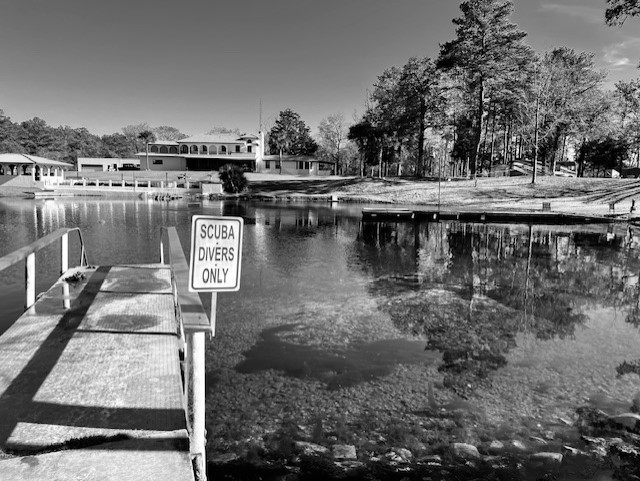
Vortex Spring, as the name would imply, was probably the most culturally unique spring that I visited. Reputed to be an energy vortex, this spring is an interesting mix of private dive school, military dive training facility, and water park. The facility included lodges and campsites, a store, and goats. They were very generous in sharing their park with me with essentially no notice (I got flooded out of some other sites that I had planned to visit that day).
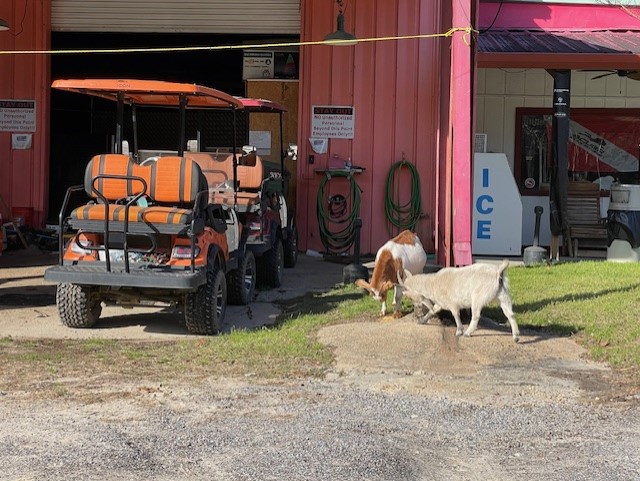
The spring is west of Tallahassee, well into the panhandle, in a landscape of uncut forest, silvaculture, agriculture and small towns.
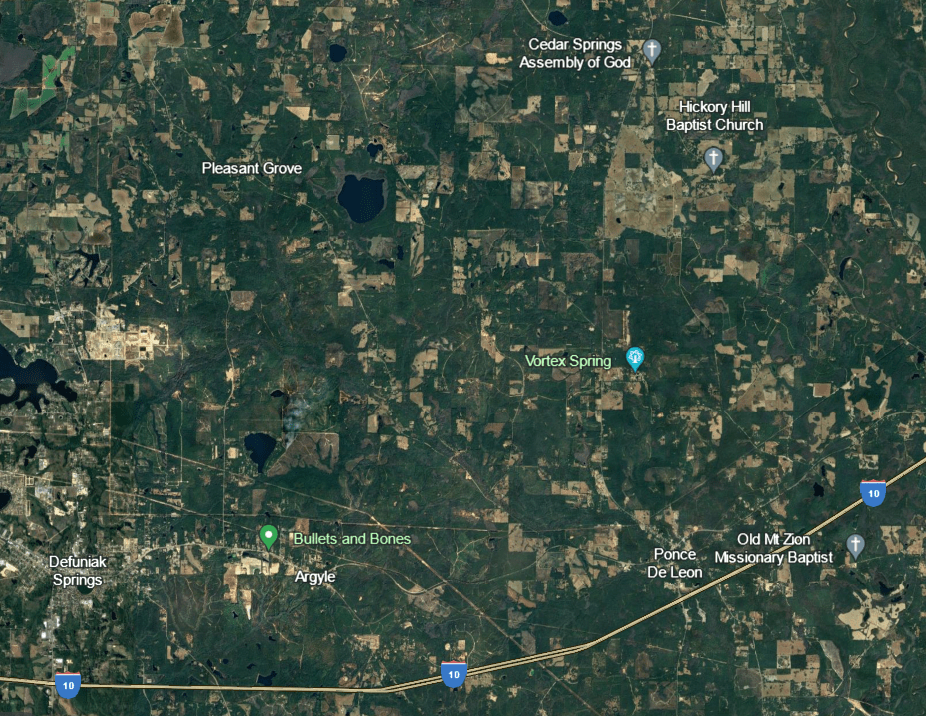
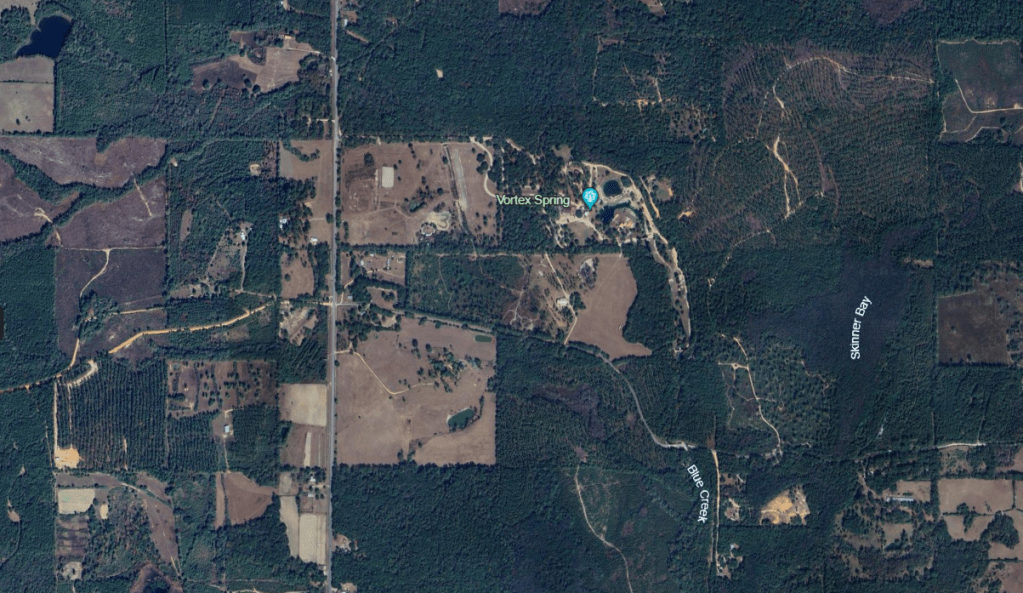
Google Earth images of the landscape matrix around the spring. At 4000 m, the town of Defuniak Springs is visible to the west (top). Zooming in shows the rows of trees in the silvaculture operations (bottom).
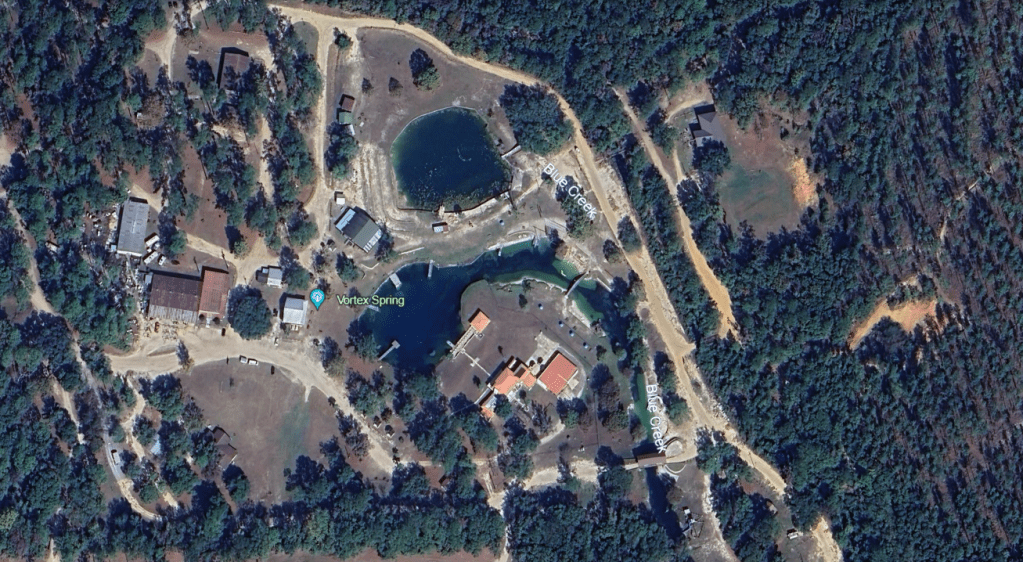
The spring at about 100 m up.
The spring run itself is called “Blue Creek” and flows eventually into the Choctawatchee River. The river flows into Choctawatchee Bay, the west side of which is open to the Gulf at Destin.
When I arrived, a small herd of pre- or early-teen kids jumped around in wetsuits on the dock awaiting their lesson, lovingly recorded by their parents on the bank.
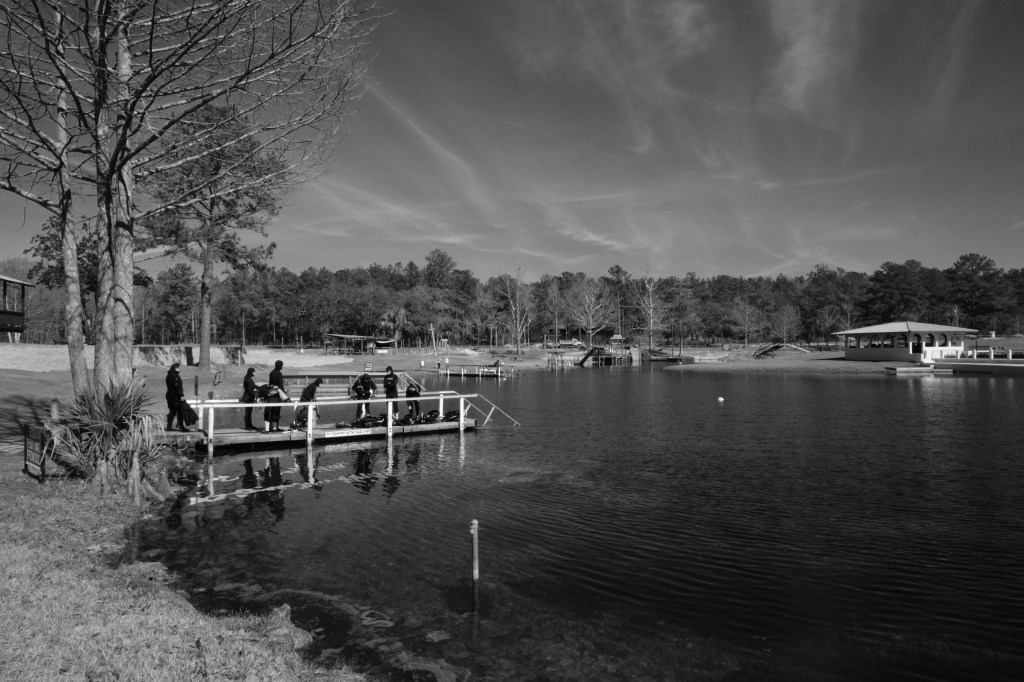
The park’s promotional material describes the spring as a “diving resort” complete with a sunken sailboat to explore. The area around and in the vent contained more gear, both above and below the water and obscure to the non-diver, than any other spring that I have seen.
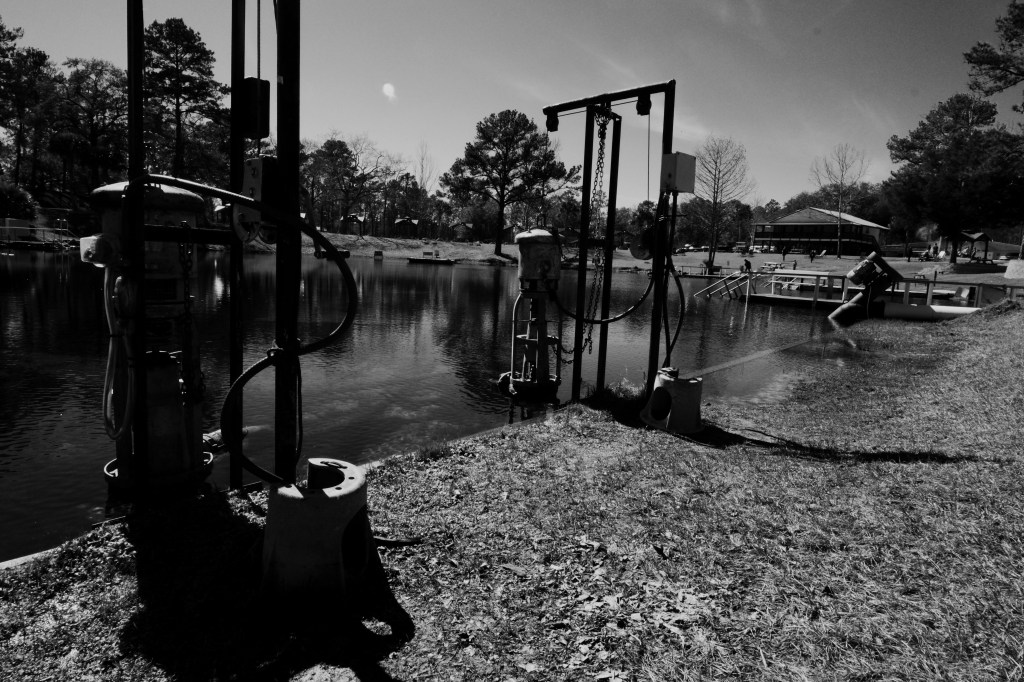
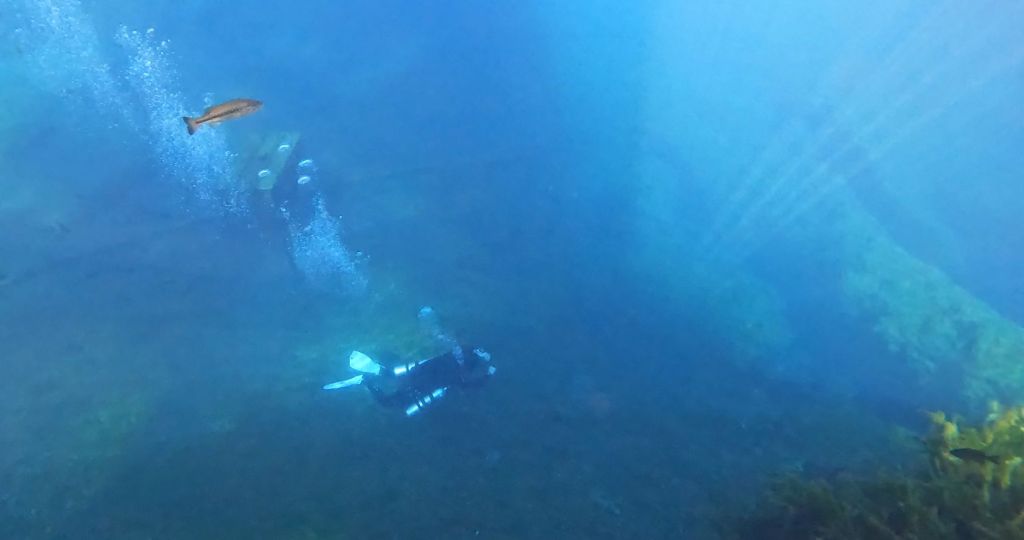
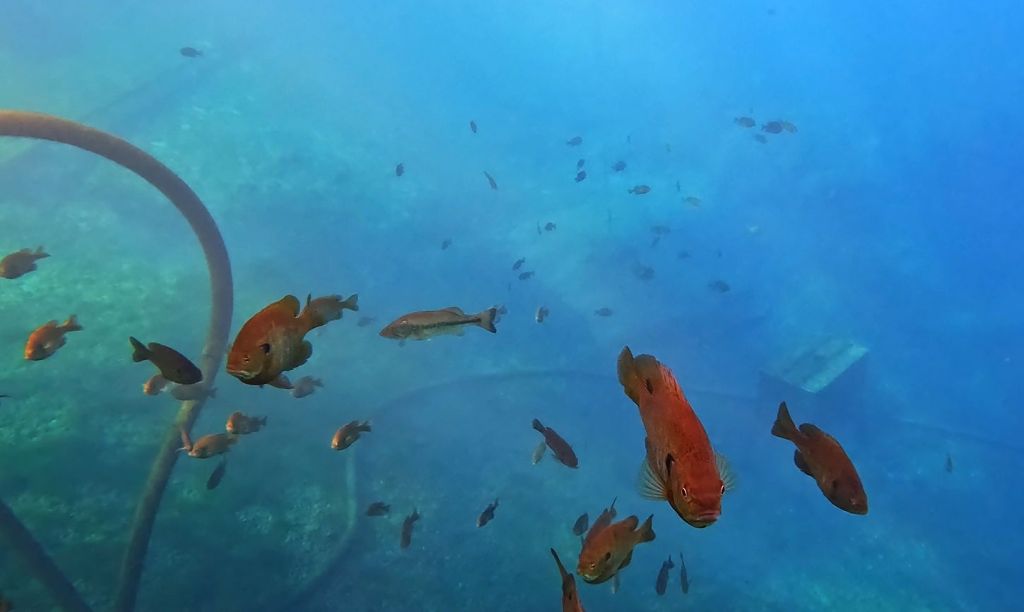
Gear on bank of the headspring (top), a diver passing by box that I read was a “air bell” (middle), and sunfish and bass completely ignoring the pipes scattered around the headspring (bottom).
The large round pool drops off quickly to 58 feet, at which point a gate blocks the entrance to a cavern that reaches down to 117 feet, accessible only to experienced cave divers with the key. As advertised, the water was, in fact, “gin clear” and filled with fish, mostly shiners, bluegill (Lepomis macrochirus), spotted sunfish (Lepomis punctatus), and largemouth bass (Micropterus salmoides).
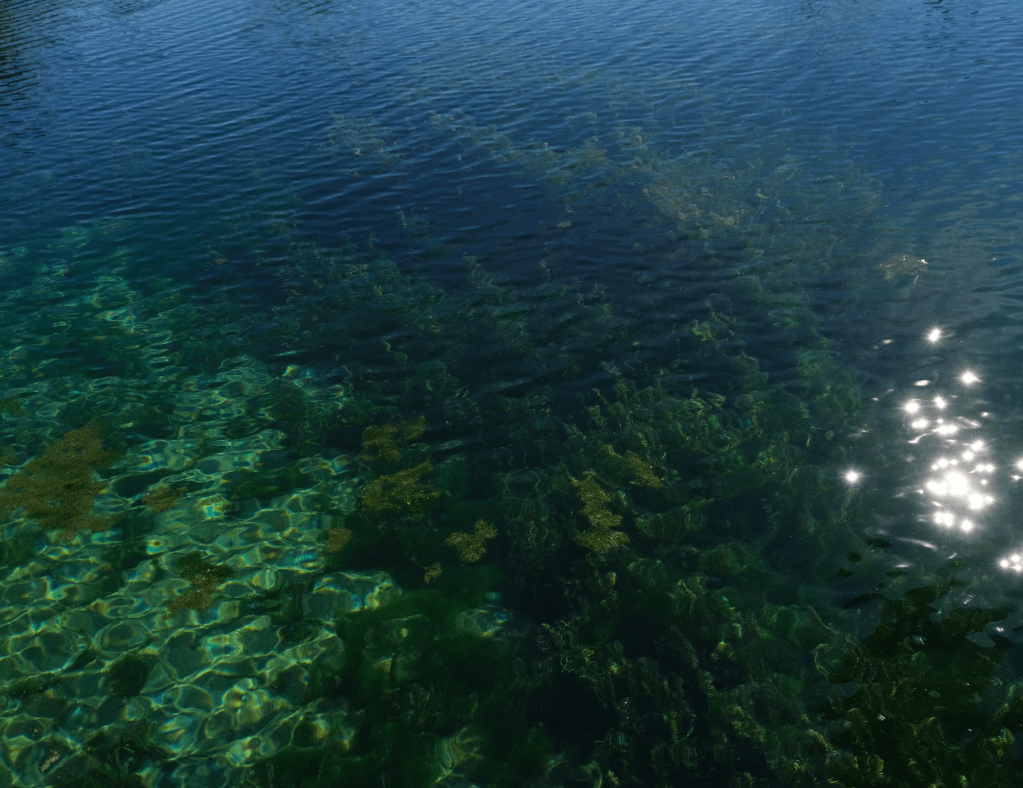

The clear water of the pool (top and middle) and a few of the very abundant shiners in the run just below the pool (bottom).
Some of the original sandy run remained, but much of it was covered with algae, as is true of a lot of Florida springs. It seems that shiners, sunfish, and bass are quite tolerant of algal-covered substrate.
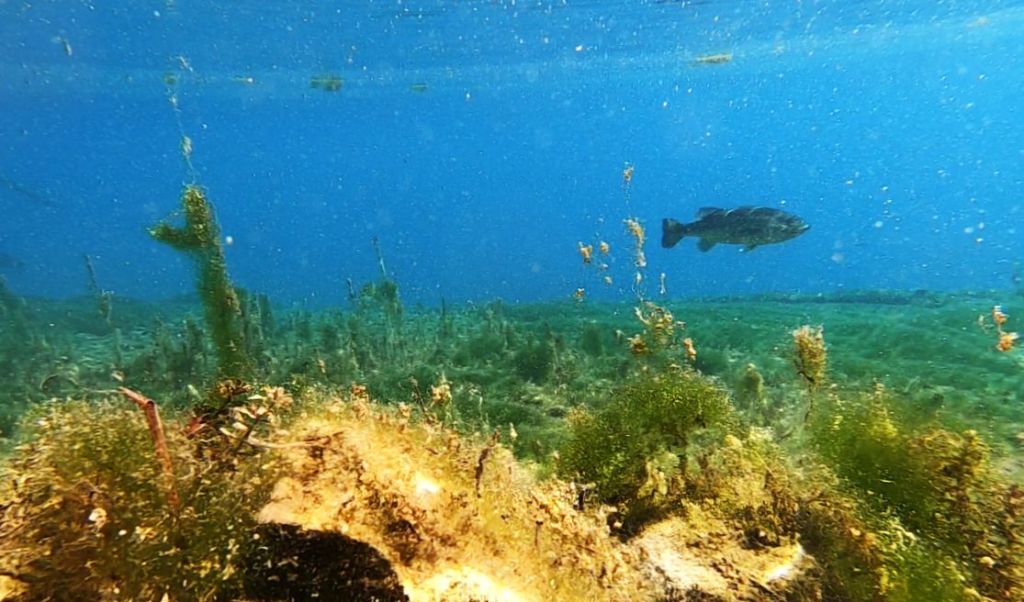
A largemouth bass patrolling over an algae-covered sandy run. Lots of bubbles were being released, perhaps due to oxygen supersaturation from rapidly photosynthesizing algae. Supersaturation happens when the algae are photosynthesizing faster than the water can absorb the oxygen, producing bubbles.
Loads of snails littered the sand where it was exposed. Although I have not keyed them out, they appeared to be what the Florida snail expert, Fred Thompson, called “spring elimia” (Elimia sp.).

An Elimia sp. that I pick up off the sand.
As I moved downstream, the park seemed to shift from dive training to water park. Bridges, a jumping platform, massive inflatable alligators, a mock ship’s crow’s nest, and water slides hinted at the crowds of swimmers that undoubtedly visit in the summer.
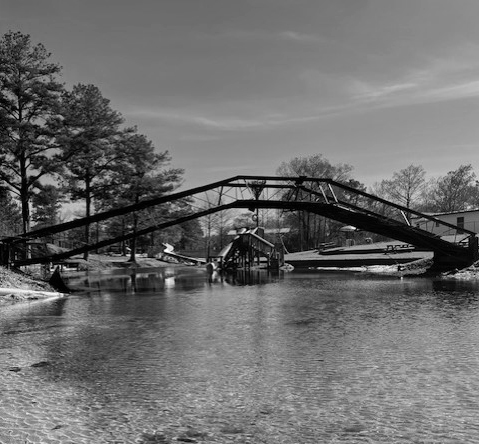


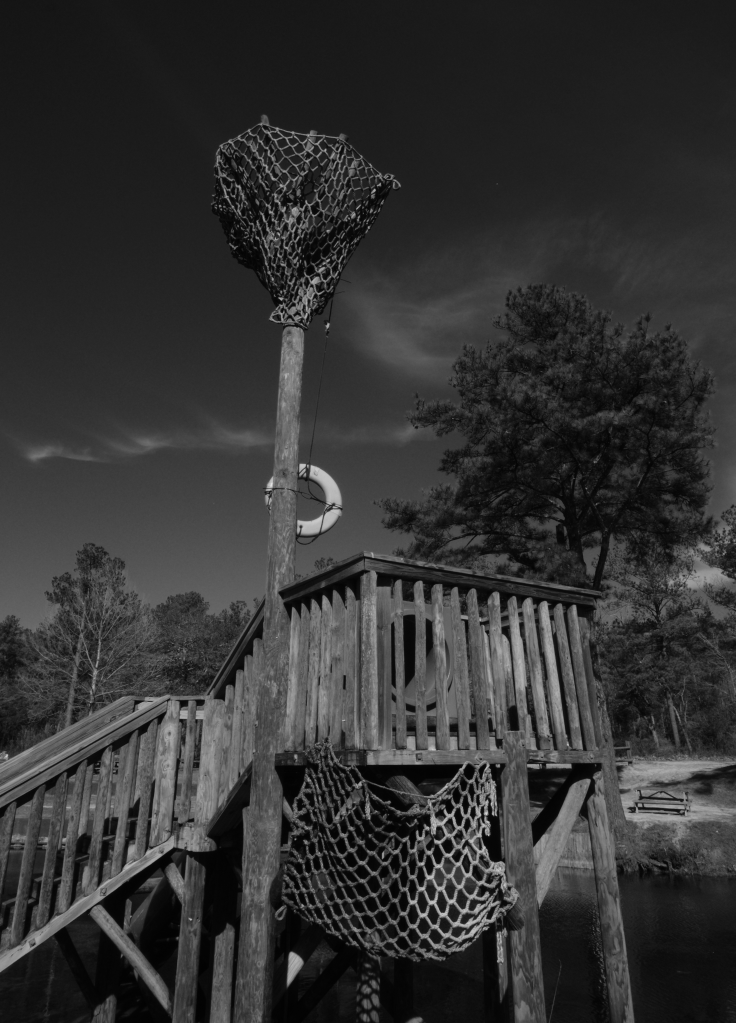
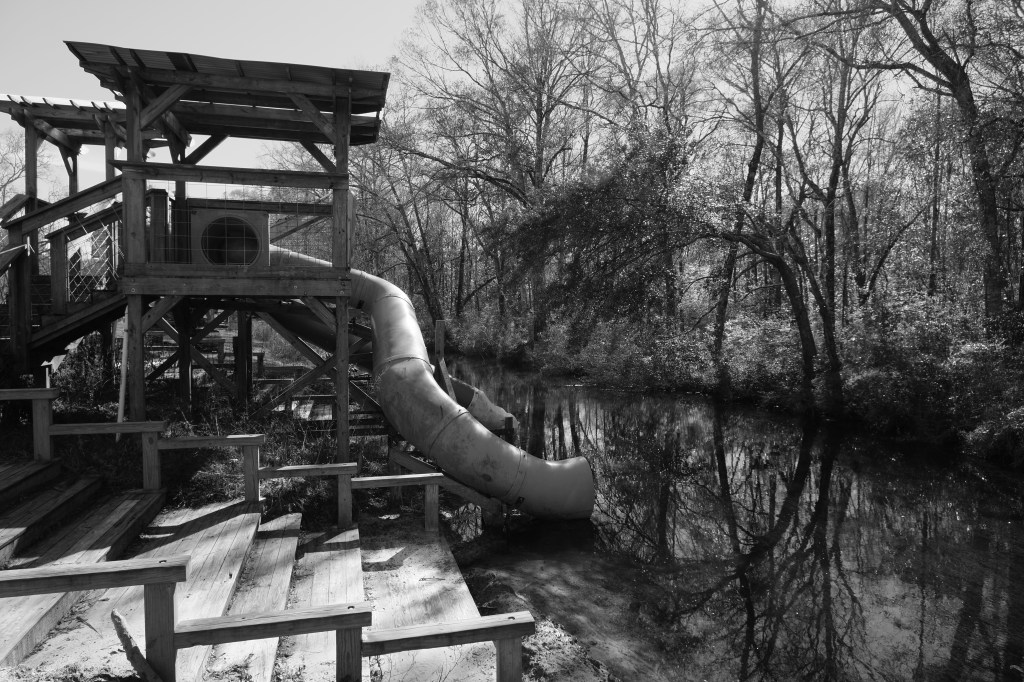
Some of the summer accessories for the water park.
Past most of the water park equipment, the far bank was forested and the run looked a bit more original. Underwater, the run’s substrate shifted from sand and algae to hydrilla (Hydrilla verticillata) and algae. The water contained a little more particulate matter, probably due to the divers upstream. The fish were still a mixture of shiners, sunfish, and bass. It was kind of theme.
Oxygen bubbles being released from the hydrilla with a largemouth bass in the background.
My measurements of temperature (19.1C), dissolved oxygen (5.74 mg/L), and conductivity (221 microS/cm) at the headspring were in line with the only report that I found about Vortex Spring in my quick search. This spring is 2-5C colder than the springs in central Florida. The oxygen in the headspring was reasonably high and it got much, much higher as I moved downstream (over 10 mg/L), which accounted for the supersaturation bubbles. The conductivity was pretty low–no saltwater intrusion or tidal effects here. The only data that I could find on other water quality parameters were from one sample in 1972 taken by the USGS. Given the algal coverage that I saw, I suspect that the nutrients are higher than the 80 microg/L of nitrate reported for this sample.


I remember checking this place out in the 1990s. It was a bit too carnival-like for us, so we moved on. Dove at Morrison Springs instead, which was beautiful.
LikeLike
I haven’t yet been able to work at Morrison Springs–it was covered in brown flood waters back in February! I’m hoping that it’s clear when I try again in May.
LikeLike