February, 2024
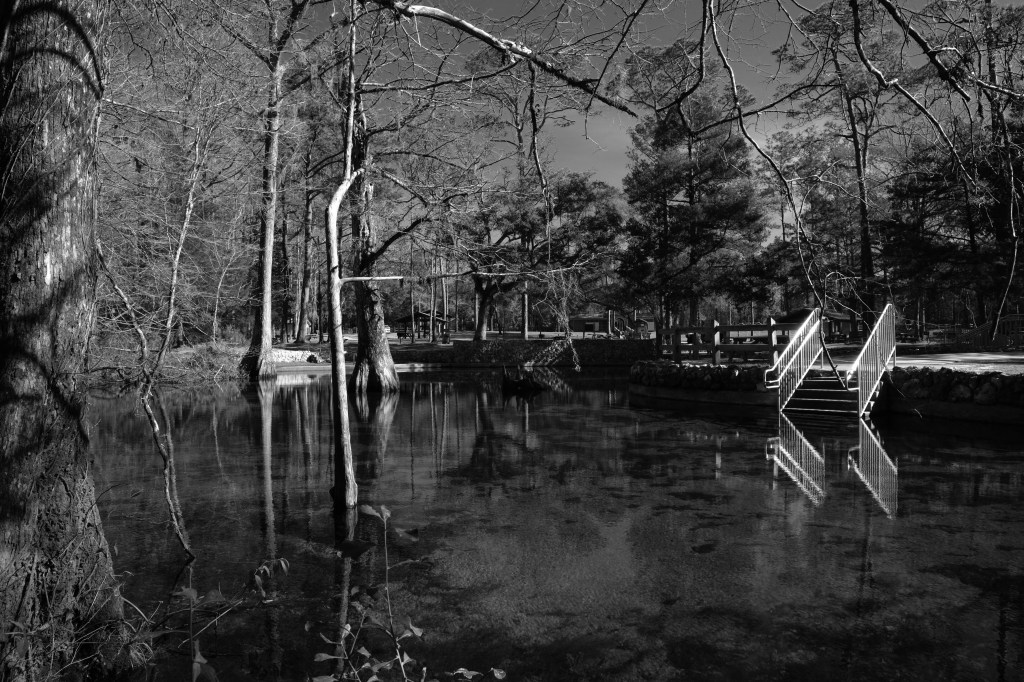
Ponce de Leon Spring was a visually mellow contrast to Vortex Spring. Personally, I find reflections in water compelling, so I liked how the reflections made a zigzag out of the stairs in the foreground and the light on the wall in the background.
Ponce de Leon Spring is in a state park several miles south of Vortex Spring and it flows into the same creek, Sandy Creek. The park sits in a swath of forest just south of the town of Ponce de Leon. Like Vortex Spring, the spring water ends up in the Choctawatchee River, via Sandy Creek, and eventually in the Choctawatchee Bay, which flows into the Gulf at Destin.
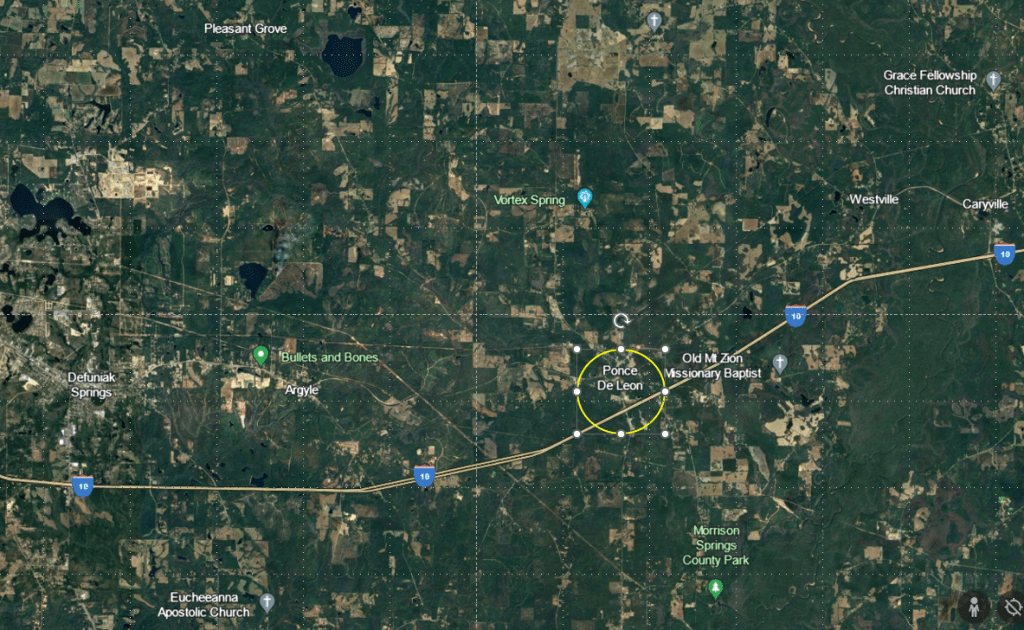

The location of Ponce de Leon Spring just east of Defuniak Springs and west of Tallahassee (top) and the forest matrix in and around the state park (bottom).
The headspring was developed as a swimming area with a large stone and cement wall along one side, complete with a diving board into its relatively deep vent. When I arrived on a chilly February day, no one was using this diving board, so photographing the lovely spring was easy.
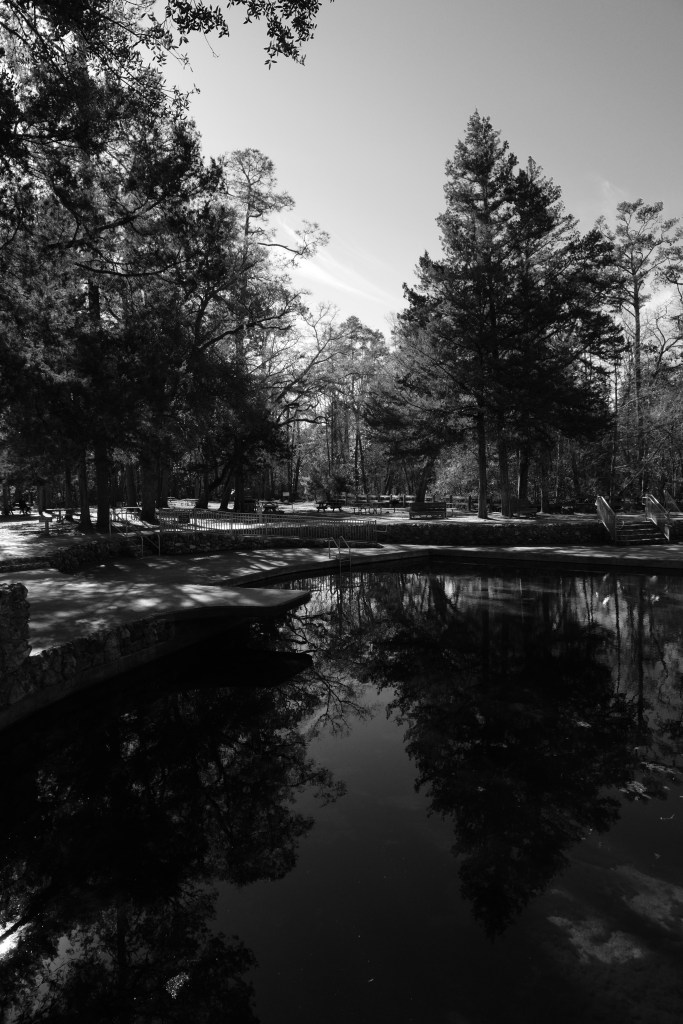
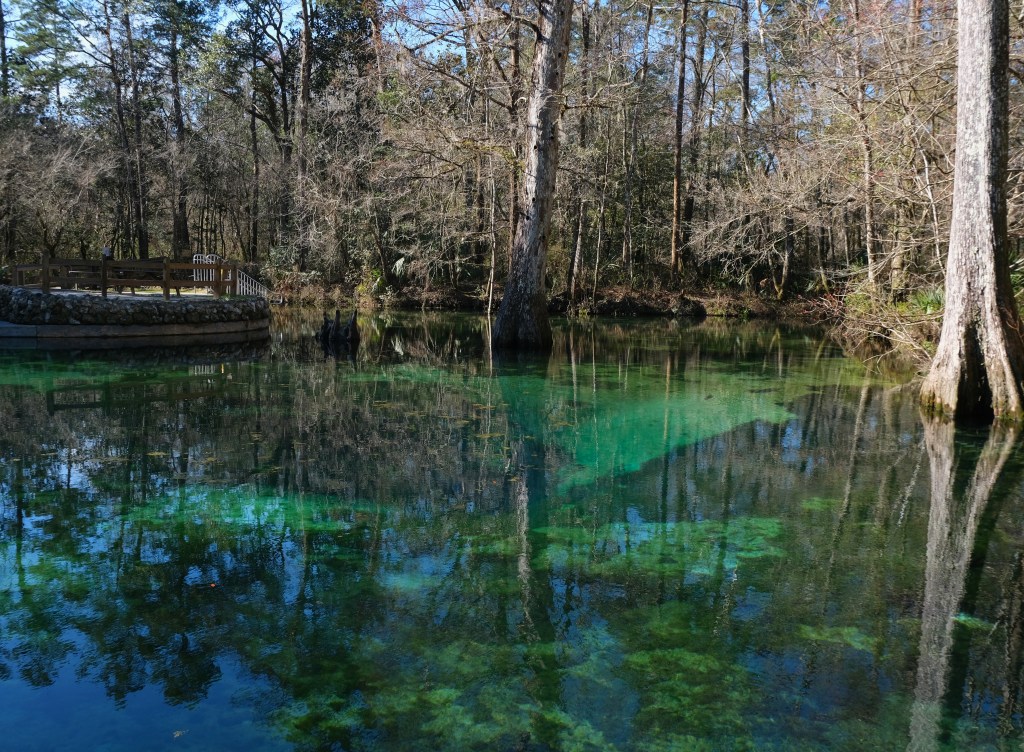
The diving board into the Ponce de Leon headspring (top) and a color view of its lovely vent (bottom).
The spring flow coming out of the headspring was somewhat restricted by a weir to produce a pool for swimming.

The weir with a bridge across the run.
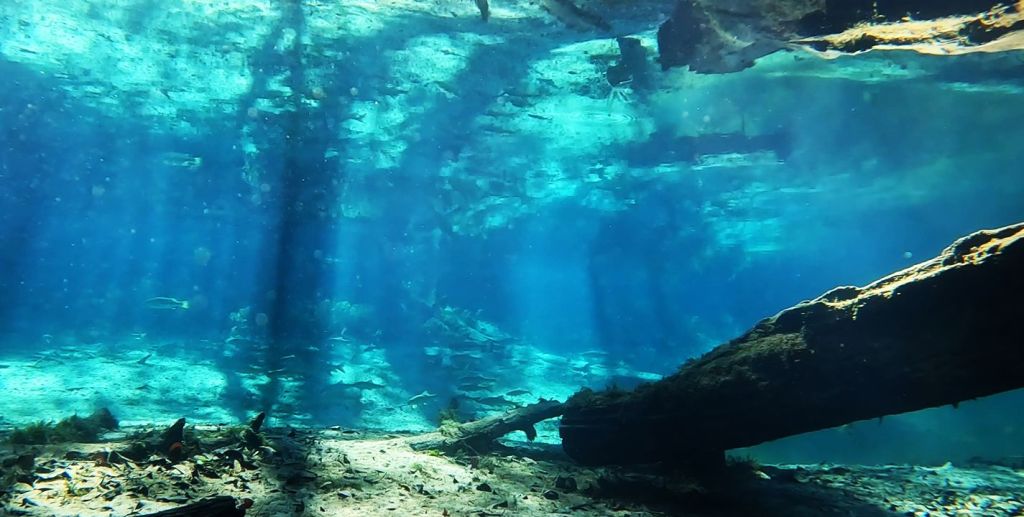
Despite this restriction, I recorded a lot of fish in the headspring area, including lots of shiners, some lovely iridescent dollar sunfish (Lepomis marginatus), and quite a few largemouth bass (Micropterus salmoides). Perhaps in part because of the restriction, the headspring was somewhat blanketed by algae.

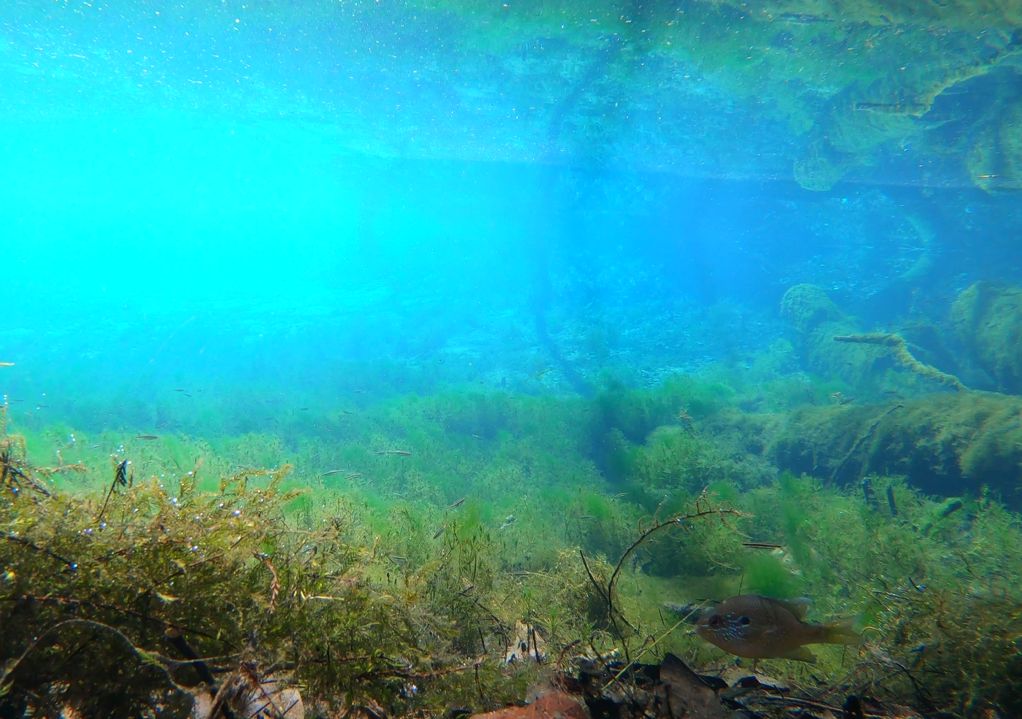
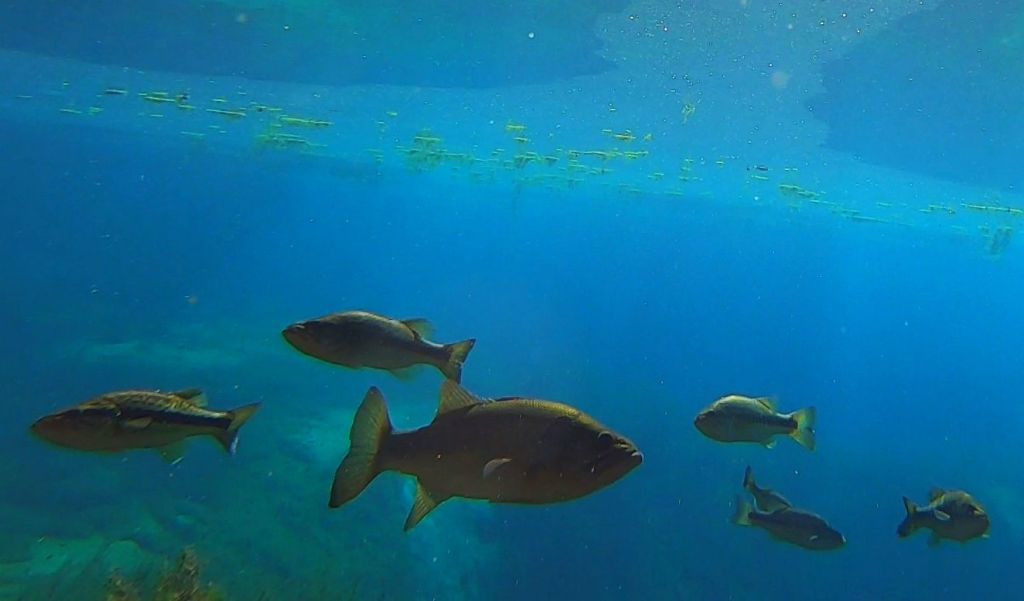
Shiners, a dollar sunfish (lower righthand corner), and largemouth bass in the blue of the Ponce de Leon vent.
Below the weir, the run turned shallow and sandy with relatively little algae.
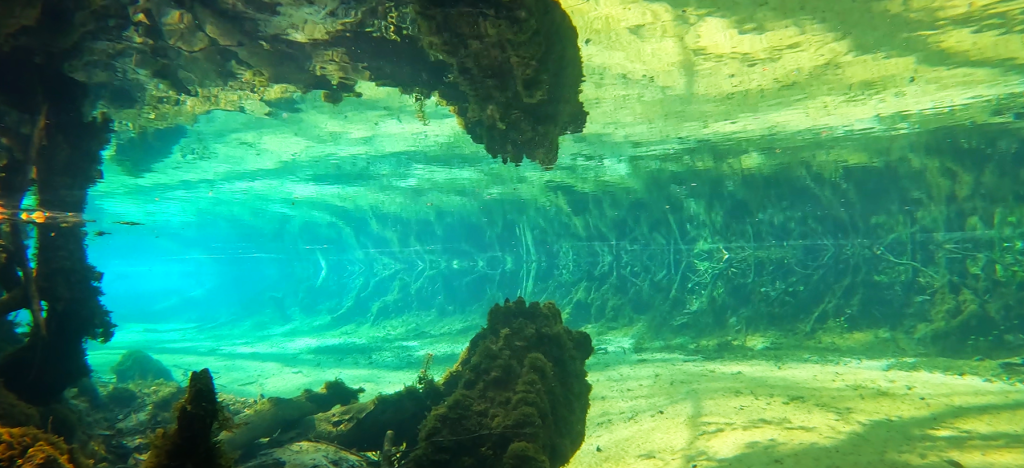
The sandy Ponce de Leon run below the weir.
In addition to the many shiners (including schools of larval shiners) and sunfish, I was lucky enough to catch a darter on camera. Given the distance and lighting, I can only suggest that it is probably a swamp darter (Etheostoma fusiforme).
A school of larval shiners moving (from the right) into a landscape of cypress knees and their reflections reminiscent of stalagmites and stalactites in a cave.
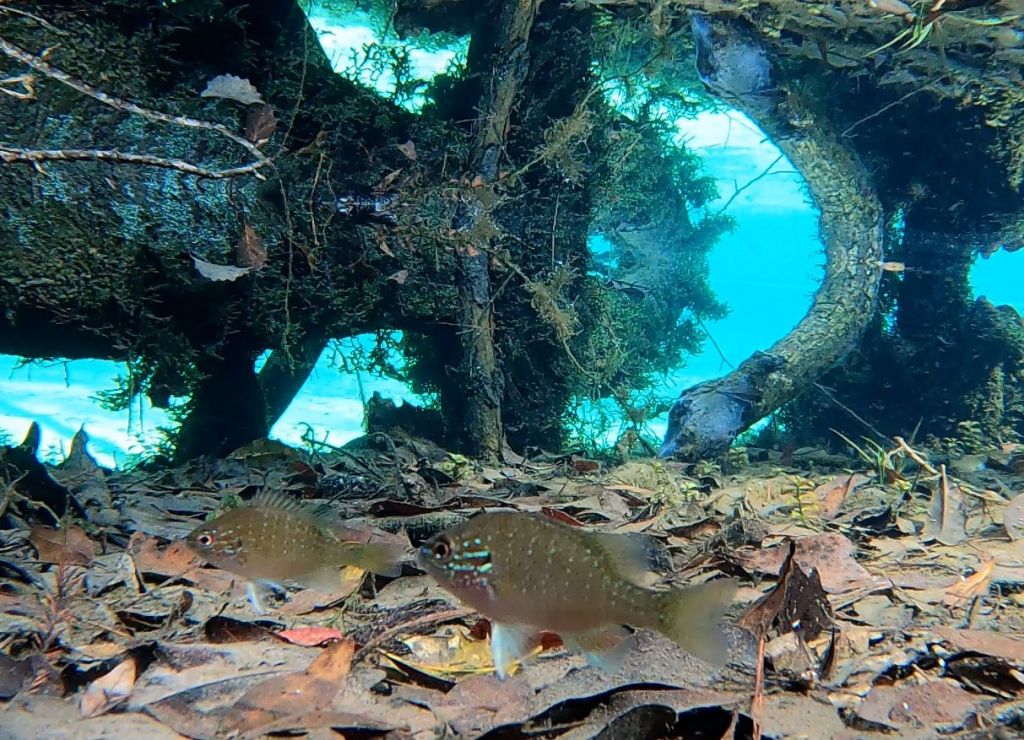
Dollar sunfish in the Ponce de Leon run.
A darter cautiously moving through the detritus and plants.
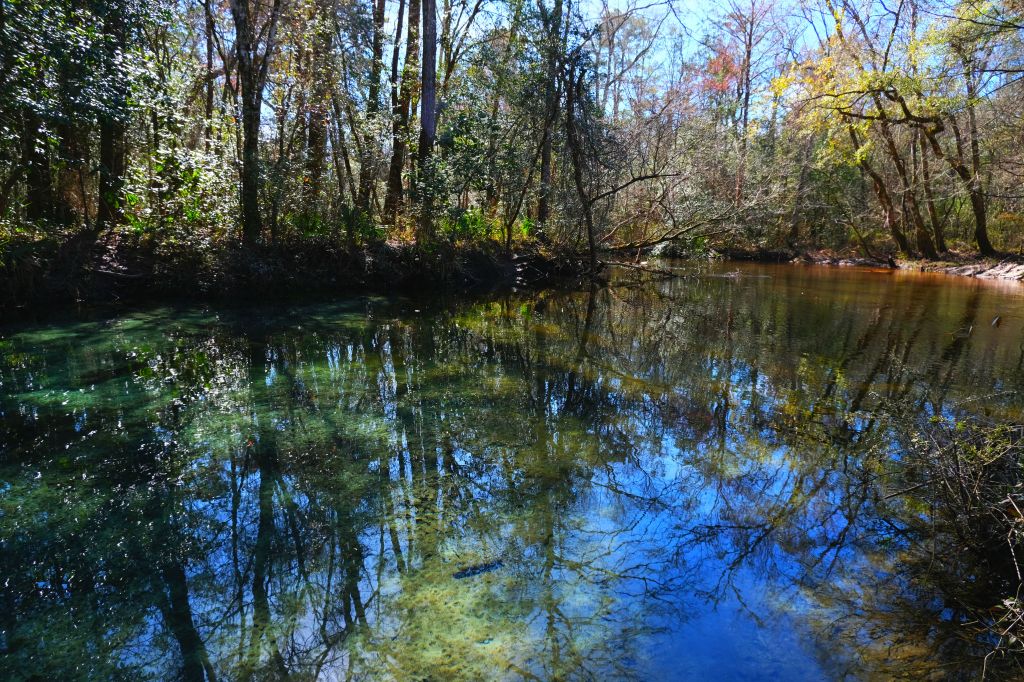
The Ponce de Leon run is fairly short and enters Sandy Creek, which is as brown as Ponce de Leon is clear and blue. And right above the confluence of the two, I captured a whole shoal of spotted suckers (Minytrema melanops) with one lonely largemouth bass that appeared to be moving in from the creek.
Like Vortex Spring, I had trouble finding a lot of data on Ponce de Leon Spring. However, The Springs of Florida USGS publication contained some data, one set from 1972 and another from 2002. Again like Votex, the temperature of Ponce de Leon was a little colder than the central Florida springs (19-20C vs. 21-24C). The dissolved oxygen was reasonable for a spring (~3 mg/L) and the conductivity was on the low side (~200 microS/cm). My real time measurements were similar, although my oxygen measurement at the headspring was a bit higher (4.7 mg/L), reaching 5.7 mg/L at the confluence with the creek. Probably due to the forested landscape, the concentrations of nitrate (0.14-0.24 mg/L) and phosphate (0.022-0.028 mg/L) were low in both 1972 and 2002. This nitrate concentration is an order of magnitude lower than some of the west central Florida springs in heavily agricultural areas.
 A Florida Spring Odyssey